A resort wedding sounds dreamy until you sit down to plan it. Suddenly you’re staring at a map with no idea which island or coastline works, quotes that seem to contradict each other, and a nagging worry that you’ve left it too late to book anything decent. Where should you hold it, what will it actually cost, and how far ahead do you need to commit?
This guide walks through the whole process step by step. We’ll look at why a resort wedding works so well for destination couples, how to choose between beachfront, cliffside and garden venues, and what packages really cost once you add flights and room blocks. You’ll also find practical timing advice on booking lead times and seasons, tips for picking a destination that suits your guest list, and a simple plan for managing guests, vendors and the wedding week itself. By the end, you’ll have a clear order of decisions rather than a pile of open tabs.
Why a Resort Wedding Works for Destination Couples
The biggest argument for a resort wedding is simple: everything happens in one place. Your ceremony on the sand, dinner on the terrace, and every guest’s room are all on the same property. That means no shuttle schedules, no taxi coordination, and no worrying about a cousin getting lost between venues. If the rain rolls in, moving everyone indoors takes minutes, not an hour of logistics.
You don’t plan it alone
Most resorts employ wedding coordinators who work on-site, and they take a huge load off your shoulders. They typically know the local florists, photographers and musicians, handle the paperwork coordination with local authorities, and build the day-of schedule so your hairdresser, caterer and officiant all arrive when they should. Instead of managing a dozen vendors from another country, you’re answering a handful of emails from one person who can physically walk out and check on things.
Your guests get a vacation too
The other benefit is how the trip feels for everyone else. Rather than a single long day wedged between flights, a resort wedding naturally becomes a 3-4 day shared experience: pool afternoons, a welcome dinner, the ceremony itself, and a lazy farewell breakfast. Guests who were strangers at the airport leave as friends, and you get far more time with the people you care about than a hometown reception ever allows.
Choosing the Right Resort Wedding Venue
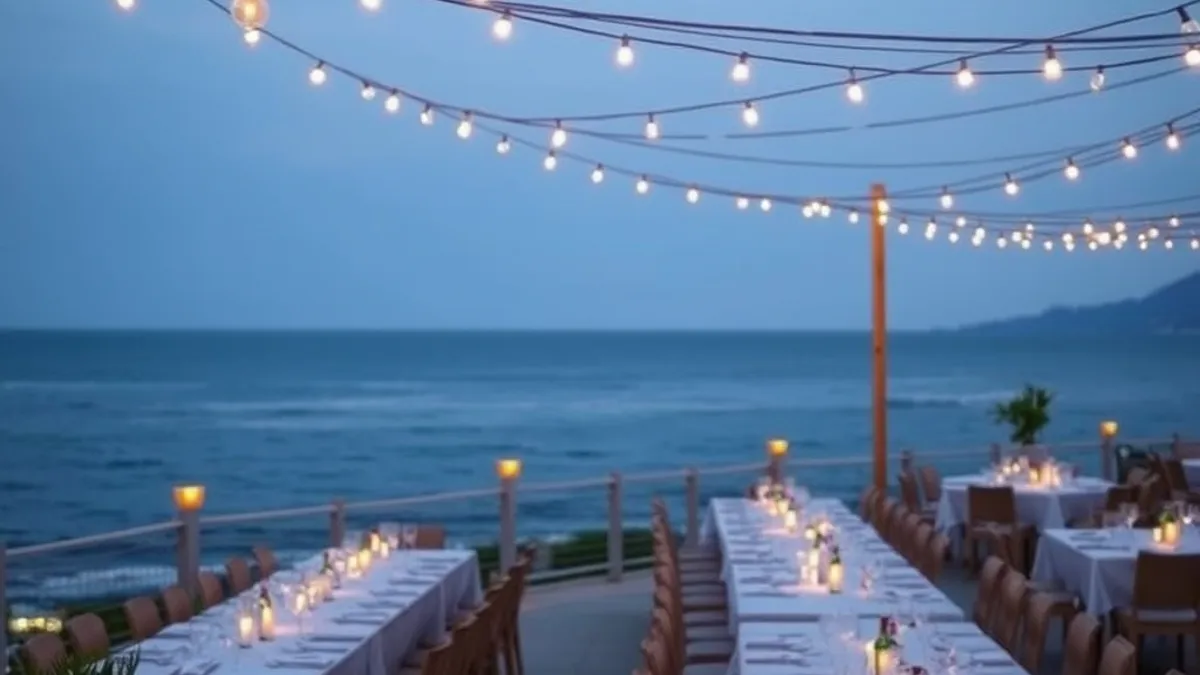
Start by matching the setting to the ceremony style you actually want. Beachfront sand suits barefoot, relaxed ceremonies with the sea behind you, while cliffside terraces give you dramatic photos but usually mean a more formal setup and more logistics for setup crews. Garden lawns work beautifully for larger guest lists and evening receptions under string lights, and overwater decks deliver a once-in-a-lifetime backdrop for smaller groups willing to travel farther for it. Think about sound too: waves, wind and nearby pool music all compete with your vows, so ask how the resort handles audio for outdoor ceremonies.
Once you have a shortlist, the details that separate a smooth wedding from a stressful one are easy to miss on a website. Photos rarely show what happens when it rains or when a cruise ship unloads day visitors onto the beach. Ask each resort these questions directly:
- Indoor backup space: confirm there’s a ballroom or covered pavilion ready for weather, not just the outdoor deck you fell in love with, and ask whether it’s set up at no extra cost or billed as a change.
- Buyout versus shared spaces: a full-property buyout gives you privacy but costs significantly more, while a shared resort means other guests may wander near your ceremony area or claim the best sun loungers in your photos.
- Public access: ask whether non-guests, beach walkers or day visitors can enter the ceremony zone, and whether the resort ropes it off during your event.
- Real capacity: a terrace that photographs well may only seat 40; check that your ballroom or terrace fits your guest count with room left for a dance floor, bar station and band setup.
Get answers in writing before you sign anything. A venue that can’t clearly describe its backup space or access rules is telling you something about how it handles surprises. If possible, schedule a video walkthrough with the coordinator so you can see the ceremony site, reception area and guest rooms in one call rather than relying on polished marketing images.
What a Resort Wedding Actually Costs
Let’s talk numbers, because resort wedding pricing is more transparent than most venue pricing. Packages typically run $5,000-$15,000 for 30-50 guests, and all-inclusive resort weddings average $200-$400 per guest once you include the venue, catering and decor. That usually makes a resort wedding cheaper than a comparable hometown event, since so much is bundled into one rate.
What to budget outside the package
The package is only part of the spend. You’ll need to budget separately for flights for the two of you, a guest room block (most resorts require 10-20 rooms), transporting your attire safely, and photography if it’s not already included. Ask your coordinator to put every likely extra in an email so nothing ambushes you later.
Where you can save
Dates matter more than negotiation. Off-peak dates can cut venue costs by 20-40% compared with peak-season pricing, so shifting your wedding by a few weeks can free up thousands of dollars. It’s also worth asking what the package excludes: hair and makeup, menu upgrades and extra decor are common add-ons that push the final bill up. Get the exclusions list before you deposit, not after.
Timing Your Resort Wedding: Booking Lead Times and Seasons
Resort weddings reward early planners. The best venues on popular coastlines and islands get booked out far in advance, and your own timeline needs room for guests to organize flights, time off and budgets. Working backward from a realistic lead time makes the whole process calmer, and it gives you leverage when negotiating room blocks and package details with the resort.
- Reserve the venue first. For peak dates, book your resort 12-18 months ahead. If you are flexible and happy with an off-peak date, 9-12 months can work, and you may even save on venue costs. Before signing, walk through the contract with your coordinator and note every deadline for deposits, final guest counts and menu choices so nothing catches you by surprise later.
- Match the season to the destination. Mediterranean resorts suit May-June and September-October, when the weather is warm but not punishing. The Maldives and Thailand shine November-April, outside their wetter months. Booking inside these windows gives you the best odds of good ceremony weather, though you should still confirm indoor backup options with the resort.
- Give guests plenty of warning. Most people need 6-9 months’ notice to book flights and request time off work. The earlier you confirm the date, the more of your guest list can actually make it. An early heads-up also helps guests split rooms or look for flight deals together.
- Get the paper trail moving. Send save-the-dates immediately after signing the contract, then follow with formal invitations around 3 months before the wedding. Include a simple website or shared document with room block details, airport transfer information and a RSVP deadline a couple of months out.
Once your date is locked and your guests have the details, the rest of the planning falls into place more easily. A clear timeline keeps the resort coordinator, your vendors and your guests working from the same calendar. Check in with the resort at each milestone, and keep your own copy of every confirmation so last-minute questions never turn into day-of problems.
Picking a Destination That Fits Your Guest List
The right destination depends less on your dream Pinterest board and more on who you are inviting. A stunning resort that requires three flights and a boat transfer will shrink your guest list fast, while an easy short-haul option keeps attendance high.
Short-haul vs. far-flung
If most of your guests live in Europe, Portugal, Spain or Croatia keep flights under 3-4 hours, which makes a long weekend feel effortless. Coastal Portugal in particular pairs resort comfort with genuine character, as you can see in these Portuguese coastal resorts. Far-flung choices such as the Maldives or Thailand suit smaller, adventure-minded guest lists who see the long journey as part of the experience.
Practical checks before you commit
Look at direct flight routes from the airports where most of your guests live, and confirm visa-free entry for the majority of your guest nationalities. A resort that is simple for you but complicated for half your guests creates headaches you do not want.
Budget is the final filter. A 4-night stay plus flights can range from $1,200 to $3,000 per person, so be honest with your guest list early. Sharing realistic cost estimates before anyone books helps people plan rather than quietly decline.
Managing Guests, Vendors and the Wedding Week
The wedding week is where a resort wedding really earns its keep. Instead of one frantic day, you get several relaxed days with the people who traveled to be there, and the resort setting makes that easy. The key is locking in the practical arrangements early, then letting the schedule do the work for you.
Start by negotiating a room block of 10-20 rooms for 2-4 nights with a group rate and flexible cancellation. Ask exactly how long guests have to book within the block, what happens to unclaimed rooms at the deadline, and whether early check-in can be arranged for anyone arriving the morning before events begin. These details matter more than most couples expect.
Then confirm the vendor situation in writing. Some resorts require you to use their in-house catering and decor, while others allow outside suppliers for a fee. Knowing this before you sign prevents awkward surprises, especially if you have your heart set on a specific photographer or florist.
- Structure the week around four anchor events. A welcome dinner, a rehearsal, the ceremony day and a farewell brunch give guests natural points to gather without feeling over-programmed.
- Leave one afternoon completely free. Guests use it for pool time, spa treatments or excursions, and you get a buffer if weather shifts your ceremony plans.
- Buy wedding travel insurance within 14-21 days of your first deposit. Buying within this window typically gets you the fullest coverage, including trip cancellation protection.
- Share the schedule digitally. A simple shared itinerary with dates, dress codes and meeting points saves you dozens of repeated questions during the week itself.
Your Resort Wedding, Planned in Order
A resort wedding answers the three questions that stop most couples: where, how much, and when. Pick a venue style and destination that match your guest count and travel reach, budget roughly $5,000-$15,000 for the package plus guest travel, and book 12-18 months ahead for peak dates. That single decision set removes most of the guesswork.
From there, lock in the room block, your travel insurance and the guest timeline early, then hand the details to the resort coordinator. Everything from catering to the ceremony schedule runs through one team on one property, which is exactly what makes this format work. If you have planned a resort wedding or are just starting out, leave a comment or share this article with a couple who needs it.