You’ve found the perfect resort photo: a wide balcony, turquoise water stretching to the horizon, and a room label promising it all. So you pay extra for that category, arrive, open the curtains, and wonder why the sea looks like a thin blue strip between two palm trees. If this sounds familiar, you’re not alone. The words oceanfront vs oceanview get used loosely across the resort industry, and the difference between them can mean a very different vacation than the one you booked.
This guide breaks down what each term actually means, what you can reasonably expect from the view, and how much more you should budget for it. We’ll cover the real definition of oceanfront, the wide range hidden inside oceanview, typical price differences, the questions to ask before booking, when the upgrade is worth your money, and how to read room categories on resort websites so the label matches the promise.
What Oceanfront Really Means at a Resort
Oceanfront is the strongest sea-related label a resort can put on a room, and it generally means one thing: the building sits directly on the beach line, often within about 50 meters of the sand. There’s no road, no pool deck and no second row of rooms between you and the water. Step outside and you’re on the beach.
What the position gets you
At many resorts, ground-floor oceanfront units open straight onto a terrace or a stretch of lawn facing the water, so you can walk from your room to the sand in seconds. Upper-floor oceanfront rooms trade that direct access for a wider, more elevated view over the beach and sea.
That said, oceanfront describes location, not a guaranteed postcard view from every angle. Vegetation, beach umbrellas or low dunes can still interrupt the sightline, especially if you’re lying in bed rather than standing at the window. Palms grow, umbrellas move, and a ground-floor terrace may look over greenery before it reaches the water.
The practical takeaway: oceanfront is the closest you can get to the sea without sleeping on the sand, but it’s still worth confirming the exact position of your unit before you commit to the premium.
What Oceanview Promises and What It Doesn’t
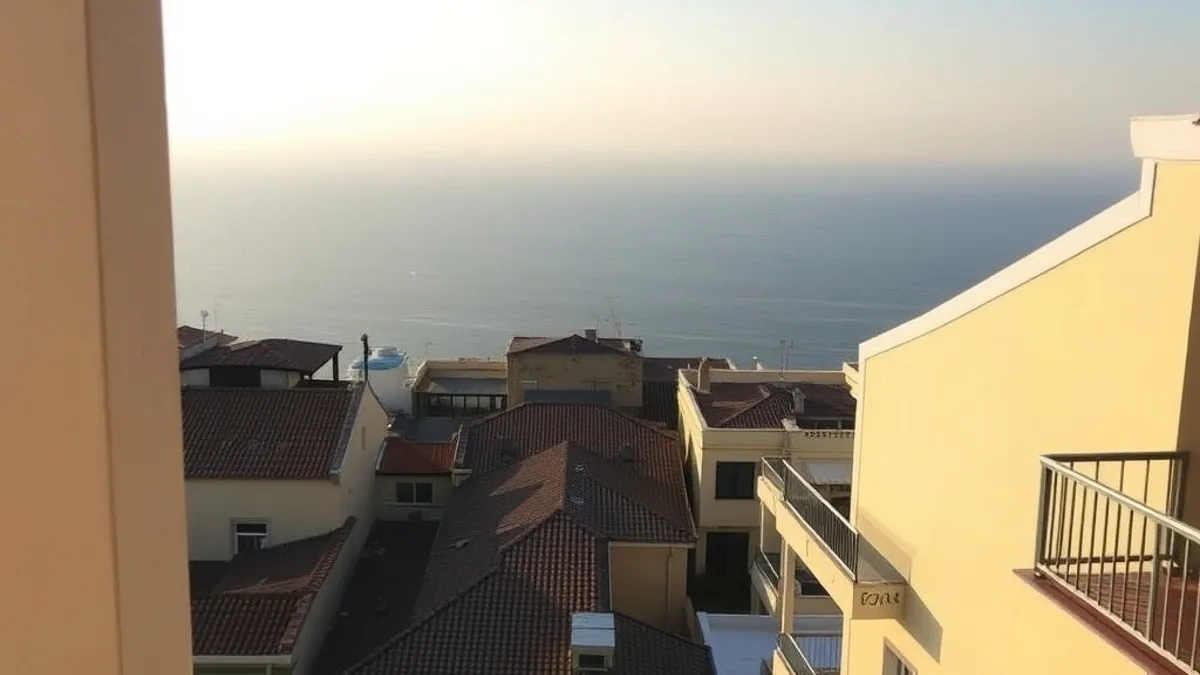
Oceanview means you can see the sea from your room. What it doesn’t tell you is how much sea, from where, or how far away. A sweeping panorama across the water, a side angle caught from the corner of the balcony, and a distant sliver framed between two buildings all technically qualify as oceanview.
Why the label covers such a wide range
Because there’s no industry-wide standard, many resorts label any room with a water glimpse as oceanview. That makes it the loosest category on a resort’s rate sheet and the one with the widest spread in quality. Two rooms in the same wing, on different floors or facing different directions, can share the same label while offering completely different experiences.
The good news is that resorts often use sub-labels to narrow things down. Partial oceanview, side oceanview and restricted oceanview are common tiers, and each one is a hint about what you’ll actually see. A partial view might show water from one side of the balcony only. A restricted view could mean the sea appears through a gap in the landscaping or above the rooftops next door.
Read these sub-labels carefully before you pay. If a listing only says oceanview with no qualifier and no view photo, treat it as the bottom of the range until you can confirm otherwise.
How Much More Oceanfront vs Oceanview Rooms Cost
Sea views cost money, and the difference between categories is usually significant. At the same property, oceanfront rooms typically run 20-40% above comparable garden-view rooms. Oceanview categories usually sit 10-25% above garden-view rates. Those gaps reflect simple scarcity: there’s only one line of beach, and only the rooms on it can be called oceanfront.
When the gap is widest
Timing matters as much as category. In high season, the beachfront inventory is fixed while demand peaks, so the premium over garden rooms tends to widen. Popular beach resorts can see their seafront categories sell out 3-6 months ahead, which means late bookers often pay top rates for whatever view remains, or miss the front row entirely.
A few practical points to keep the numbers honest:
- Compare categories within the same resort, not across different properties, since base room quality varies widely.
- Check whether the price difference is per night or per stay, especially for longer trips.
- Remember that a percentage premium applies to the room rate only; taxes and fees rise with it.
If the gap between oceanview and oceanfront feels large for your dates, it’s worth checking both against the garden-view rate and deciding how much the extra meters to the sand are really worth to you.
Questions to Ask Before Booking a Sea-View Room
Room labels tell you the category, but not the reality of your specific room. Two rooms in the same “oceanview” category can sit on different floors, in different wings, with completely different sightlines. The single most useful habit before booking is to ask the resort for the exact floor, wing and room number you would be assigned. This small step can prevent most view disappointments, because it turns a vague promise into a concrete answer you can check.
Floor level matters more than most travelers expect. Rooms above the 3rd floor often gain clearer sightlines than ground-floor units, where palms, hedges and beach umbrellas can block the water even in a genuinely sea-facing category. A ground-floor oceanview room might show you a wall of greenery with a sliver of blue at the edge; the same category on the 4th floor can offer an open horizon.
Also be honest with yourself about where you want the view. A room where you can see the sea from the bed and from the terrace delivers a very different experience than one where the water appears only if you stand at a specific window and lean. Before you commit, run through these questions:
- Request an unedited guest photo of your exact room. Marketing thumbnails are wide-angle and often taken from the terrace’s best corner; a straight photo taken from the bed or the center of the room shows what you will actually see.
- Ask for the resort’s own room-view diagram. Many beach resorts keep a property map that marks which rooms face the water directly, which face it at an angle, and which look over the pool or garden first.
- Confirm the terrace orientation. A terrace angled toward the sunset or along the shoreline can feel far more “ocean” than a room with a technically wider but less usable view.
- Check what sits between your room and the sand. Dunes, beach bars, paddleboard racks and umbrella rows can sit low enough to matter on the ground floor but disappear entirely from an upper level.
When the Upgrade Is Worth It
Whether the premium pays off depends mostly on timing and on how you actually spend your days. At popular beach resorts, seafront rooms are the first to sell out, and in high season the best oceanfront categories can be gone far in advance of your travel dates. If you have your heart set on stepping straight from your terrace onto the sand, book early rather than hoping for a late upgrade, and confirm your exact room details with the resort when you reserve.
In shoulder months, the calculation changes. If you plan full days of excursions, snorkeling, spa treatments and dinners out, you may only glance at the water at sunrise before heading out. An oceanview room gives you that morning sea glimpse at a lower price, and the money you save often covers an extra activity or a nicer dinner. Resorts where the water experience is already built into the day are a good example: at places like the Joywater resorts in Thailand for spa rituals and beach-soft mornings, the pool deck, dining terraces and beach areas deliver the sea all day long, so the room itself matters less.
When oceanfront is worth paying for
Pay the premium when the room is the destination: honeymoon trips, lazy beach days, or stays where you will spend real hours on a private terrace. Direct beach-line proximity is the hardest thing for a resort to replicate anywhere else on the property, and it is precisely the inventory that disappears first. If the whole point of the trip is waking up to the water and lingering over coffee with your feet in the sand, the upgrade earns its keep.
When to save the money
Skip the upgrade at resorts where the pool, restaurants and beach loungers already put you at the water’s edge from morning to evening. If the sea is a two-minute walk from any room and the common areas do the work, a garden or pool-view category is usually the smarter spend. Put the difference toward a longer stay, a spa treatment or a boat trip, and you will likely get more out of the vacation than from a view you only see briefly each day.
Reading Room Categories on Resort Websites
Resort websites rarely make comparison easy, but the category names themselves carry a hierarchy if you know how to read them. Beachfront, oceanfront, sea-facing, oceanview and partial view are ranked tiers, not synonyms. A beachfront room typically sits closest to the sand, oceanfront follows, and oceanview and partial view drop further back or off to the side. Compare the floor plans and category names side by side rather than assuming two similarly named rooms are equivalent.
Size details are another reliable signal. Genuine oceanfront rooms usually advertise direct beach access, and listings tend to highlight square meters and terrace size for these categories. If a room’s description mentions a generous terrace, steps to the sand or a beach-facing deck, that is a stronger clue than the word “ocean” alone. A vague description with no mention of beach access often signals a room that merely looks toward the water.
Finally, trust other guests over the marketing team. Guest photos filtered by room category reveal the real sightline far better than official renders, which are often taken from the single best angle in the best room in the category. Before booking, spend a few minutes on this checklist:
- Filter photos by reviewer, not by resort. Official galleries show the showroom room; guest uploads show the tired furniture, the palm blocking the terrace and the actual angle toward the water.
- Note the floor level in guest captions. If several reviewers in the same category mention different views from different floors, treat the category as a range rather than a guarantee.
- Compare terrace dimensions across tiers. A 10-square-meter difference in terrace size between two categories often matters more day to day than the view difference itself.
- Watch for renamed categories between seasons. Some resorts relabel rooms after renovations, so a description written years ago may no longer match the current tier structure.
Choosing the Right Room Label for Your Stay
The mystery behind these labels comes down to a few simple definitions. Oceanfront rooms are positioned right at the edge of the sand, while oceanview covers anything from a full panorama to a distant sliver of water. The price gap runs roughly 10-40% over garden views, depending on the category and the season.
That gap only pays off when the label matches reality. Verified details such as the exact floor, wing and room number, plus an awareness of how resorts tier their categories, turn a vague promise into something you can rely on. Then match the room to your plans: if you will spend full days outside and only glance at the water at sunrise, a lower tier may suit you fine. If the sea is the whole point of the trip, the top category is usually the safer bet. Have you ever booked a sea-view room that did not match the photos? Share your story in the comments or pass this article along to a fellow traveler.