Booking a coastal villa sounds simple until you’re staring at two listings in the same destination: one perched dramatically above the water, the other with sand literally at the doorstep. The cliffside villas vs beachfront villas question trips up even experienced travelers, because each type wins on things the other simply can’t offer.
This guide walks through the trade-offs that actually matter: the difference between panoramic elevation and sand-level intimacy, how much effort it takes to reach the water from each, what the price gap really buys, and how privacy, noise and group type should shape your decision. We’ll also cover booking timelines, since the two villa types behave very differently in high season. By the end, you’ll know which one fits your trip rather than the photo.
Views: Panoramic Drama vs Sand-Level Serenity
The view is where these two villa types part ways most dramatically. Cliffside villas typically sit 30-150 meters above sea level, and that elevation changes everything about what you see. Instead of looking along a line of beach umbrellas, you gaze out over a wide horizon, with layered blues, passing boats and coastline stretching into the distance. Sunset angles from that height are the kind beachfront properties simply can’t replicate.
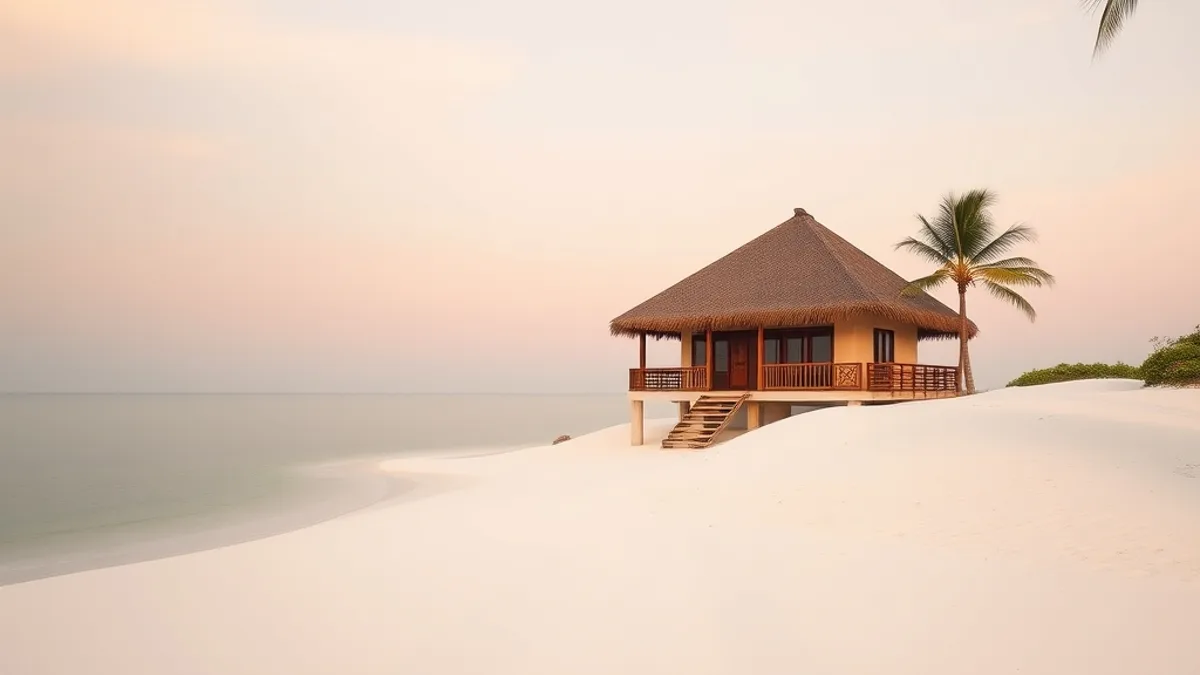
Beachfront villas trade that drama for intimacy. Waves arrive at eye level, and you can walk from your terrace straight onto wet sand. The trade-off is that views are often framed by neighboring properties, palms and dune vegetation, so you’re looking at the sea through a corridor rather than across it.
Comfort at altitude
There’s a practical bonus to elevation too. Cliff positions catch more wind and light, which keeps terraces noticeably more usable during humid tropical months, when sea-level air can feel heavy and still by late afternoon.
Before committing to either, ask one simple question: does the view face west or east? West-facing villas deliver sunsets over the water; east-facing ones give you sunrise and often calmer morning light. Many travelers book a stunning villa only to discover the sun sets behind the hills behind them. Confirm the orientation in writing with the owner or manager before you pay the deposit.
Beach Access: Steps, Shuttles and Sand at the Door
This is the category where the two villa types differ most in daily life. Beachfront villas commonly put you on the sand within 1-2 minutes on foot, which is why they’re the default choice for families with small children. Wet swimsuits, sand toys and snack runs all become trivial when the beach is essentially an extension of your terrace. You can pop back for a forgotten hat, refill water bottles between swims and let kids rest in the shade of your own veranda instead of hauling everyone to a beach club.
Cliffside villas ask more of you. Reaching a swimming spot typically means descending 50-200 steps or taking a 5-15 minute shuttle ride, and that journey shapes every single beach day. Forget the sunscreen and it’s a real decision whether to go back for it. Pack a proper beach bag each morning: towels, water, snacks and anything the kids might need, because midday trips up and down get old fast.
- Stairs: The most common option, and the one to scrutinize hardest. Ask how many steps, whether they’re shaded and whether there’s a handrail, since a steep stone staircase in midday heat is a different experience from a gentle paved path.
- Funicular: Some cliffside properties have a small cable railway, which removes the physical effort entirely but may involve waiting and occasional maintenance downtime.
- Hotel shuttle: Convenient, but check the schedule and whether it runs on demand or at fixed intervals, because a set timetable can dictate when your family swims.
Cliffside swimmers should also confirm what’s actually at the bottom. Ask whether the water below the cliff is swimmable at low tide or whether it turns rocky and shallow, in which case you may need to walk or shuttle to a proper swimming beach anyway. Water shoes are worth packing either way, since rocky entry points are common on cliffside coastlines. Finally, ask about sea conditions: some cliff-side coves are calm and glassy while others catch swell, and a quick question to the villa manager before booking can save your family from a week of unsuitable swimming water.
Price: What the Premium Actually Buys
Here’s the part that surprises many travelers: elevation usually costs less, not more. Cliffside villas typically run 15-30% cheaper than comparable beachfront villas in the same destination. The sand-front location is the scarce commodity, and that scarcity is what you’re paying for, not superior construction or service.
What the premium actually covers
The beachfront premium buys direct sand access, full stop. It doesn’t necessarily buy more space, newer interiors or better amenities. In many destinations, the clifftop villa two minutes up the road has a larger pool, a more modern kitchen and a bigger terrace than the beachfront option at a higher price.
Timing matters just as much as location. Shoulder-season stays in May-June or September-October typically cut rates 20-40% below peak for both villa types, which can bring a beachfront property into the same budget as a peak-season cliffside one. Weather in these months is often still solid in most coastal destinations, though it varies by region, so check conditions for your specific spot.
Finally, compare per-bedroom pricing rather than headline rates. Because cliffside villas often offer larger layouts for the same budget, a four-bedroom clifftop villa can occasionally cost less per bedroom than a three-bedroom beachfront one. If you’re splitting the cost among several couples or families, that math can flip the decision entirely in favor of the view.
Privacy and Noise on the Coast
If privacy ranks high on your wish list, elevation is your friend. Cliffside villas are naturally screened by the terrain itself, so neighbors, beach walkers and passersby simply can’t see you the way they can from a flat stretch of sand. Many elevated properties feel like private lookout points, and some, like the overwater-style retreats described in Maldives Overlooks floating between Water, Sky, and Privacy, take that sense of separation even further.
What beachfront strips sound like in peak season
Beachfront villas trade some of that seclusion for convenience. During the busiest months, popular stretches carry steady foot traffic, beach vendors working the sand and the buzz of water-sports operators launching kayaks and jet skis nearby. It’s lively rather than unpleasant, but if you’re reading on the terrace at mid-morning, expect company.
Sound works differently at elevation, too. From a cliffside terrace, waves register as a soft, distant background hum rather than the constant surf you hear right at the wall of a beachfront bedroom. Light sleepers often find the elevated version easier to live with.
Whichever type you choose, ask the operator for the quietest plot: the end of a row, or the villa positioned on the cliff edge away from shared paths and pools. A one-line email before booking can make a real difference to your week.
Who Each Villa Type Suits Best
The right villa depends less on the destination and more on how your group actually spends the day. If your idea of a good morning involves a swim before breakfast, a beachfront villa makes that effortless, with sand typically a 1-2 minute walk away. If your days revolve around a camera, a long lunch on the terrace and watching the light change over the water, elevation will reward you far more than a quick dip would.
Quick matching guide
- Daily swimmers and snorkelers: beachfront puts paddleboards, masks and fins within steps of your door, so you can hit the water on a whim instead of planning around a shuttle schedule.
- Travelers with toddlers: short, flat access to the sand means naps, snacks and sunscreen reapplication all happen without a trek back uphill.
- Mixed-mobility groups: older relatives or anyone with knee or hip issues will appreciate avoiding the 50-200 steps or shuttle rides a cliffside villa typically involves.
- Honeymooners: cliffside seclusion, distant surf and terraces screened by terrain suit couples who want to feel alone together.
- Multi-generation groups: beachfront convenience keeps grandparents, parents and kids all within easy reach of the water and each other.
Photographers and sunset-chasers, meanwhile, will find cliffside terraces hard to beat. Match the villa to your group’s slowest member and your most repeated activity, and the choice usually makes itself.
A simple way to decide is to picture your typical hour, not your ideal one. If you would realistically head to the water two or three times a day, lugging towels, coolers and sandy kids up and down a cliff path will wear thin fast. If you would rather settle onto a terrace with a book and rarely leave except for meals, the extra effort of elevation costs you nothing. Be honest about your group’s rhythm before you book, because the villa you choose shapes every single day of the trip.
When and How to Book Each Type
Booking timing matters more on the coast than almost anywhere else, because true sand-front inventory is limited and everyone wants it in the same weeks. A villa that sits directly on the beach is a scarce product in every destination, and the most desirable positions rarely linger on availability calendars. The good news is that a simple timeline, plus some flexibility on dates, can save you serious money on either villa type. It also spares you the disappointment of finding your first-choice villa gone months before you travel.
- Set your destination and season first. Peak windows run roughly December-March in tropical regions and June-August in the Mediterranean, and rates follow those windows closely.
- Book beachfront earliest. For high season, plan on reserving a true sand-front villa 6-12 months ahead, since the number of villas with direct beach access is small and the best ones go first.
- Give cliffside villas 3-6 months of lead time. Elevated inventory is typically larger, so a shorter runway usually still secures your preferred peak-season dates.
- Target the quieter months on either side of peak. Traveling just outside the busiest weeks can soften rates considerably for both villa types, and conditions are generally stable in most coastal destinations. Ask your operator which specific weeks apply to your destination, since the shape of the shoulder season varies by region.
- Confirm the details before paying. Ask about exact access, view direction and villa position, then recheck current rates and cancellation terms with your operator.
Whichever route you take, set calendar reminders for your booking window rather than browsing casually and hoping for the best. Coastal villas reward early planners: the same villa can look very different in price six months before peak than it does six weeks out, and by then you may be choosing between leftover dates instead of choosing freely. If your dates are fixed, book at the front of the window; if you can shift by a week or two, say so when you enquire, because flexibility often opens up options and rates that rigid travelers never see.
Cliffside Villas vs Beachfront Villas: The Short Answer
So which villa is worth the trade-offs? Beachfront wins on access and convenience: sand within a 1-2 minute walk, easy swims, and no stairs to manage. Cliffside wins on views, privacy and price, typically running 15-30% cheaper than a comparable beachfront villa in the same destination.
The smartest move is to match the villa to your group. Swimmers and families with small children belong on the sand; view-seekers, photographers and honeymooners belong on the cliff. Book beachfront earliest, since true sand-front inventory is scarce, and use shoulder season to soften the premium on either type. If this helped you decide, leave a comment or share the article with your travel crew.