You’ve seen the photos: an infinity pool suspended over the sea, the horizon stretching forever. Then you arrive, suitcase in hand, and realize the view comes with a catch. The cliffside villas vs oceanfront villas debate is really a trade-off between drama and convenience. Cliffside villas commonly sit 30-100 meters above sea level, and reaching them often means tackling 80-200 steps or a steep switchback path. Oceanfront villas flip the equation: you’re steps from the sand, but with less elevation and more exposure to wind, waves and passersby.
Neither choice is better on its own; the right one depends on how you actually travel. Do you prize a sweeping panorama from above, or the two-minute walk to the water that oceanfront villas usually offer? In this article, we’ll compare what each villa type really means, how the views differ, what daily access and logistics look like, how elevation affects privacy and noise, what each typically costs and when to book, and how to decide which suits your trip.
What Cliffside Villas and Oceanfront Villas Actually Mean
The labels “cliffside villa” and “oceanfront villa” sound interchangeable, but they describe very different properties. A cliffside villa is built on elevated coastal terrain, commonly somewhere between 30 and 100 meters above the water. From that height, you look down and out over the sea, which is why these villas tend to advertise sweeping horizon views.
An oceanfront villa, by contrast, sits at or near sea level, typically 10 to 30 meters from the waterline. The defining feature is direct access: you can usually step off your terrace and be on the beach or a private dock within a couple of minutes. You’re at the water’s edge rather than above it.
Why the categories overlap in listings
Here’s where bookings go wrong: both types often appear under the same “sea view” filter on rental platforms. A villa perched 80 meters up a cliff and a ground-floor unit beside the sand can both claim ocean views, and technically both are correct. The label alone tells you almost nothing about your actual experience.
The solution is to read the listing details rather than the headline. Look for two specific numbers: the elevation above the water and the distance to the waterline. If a listing doesn’t state them, message the host before booking and ask directly. Reputable hosts answer these questions easily.
Elevation matters more than most travelers expect, because it determines two things at once. It shapes the angle of your view, whether you gaze across the horizon or watch waves from terrace level, and it dictates the physical effort of every trip to the water. A villa with a stunning panorama loses some appeal if reaching the sea means a steep descent each time you want to swim.
Views: Panorama from Above vs Immersion at Sea Level
This is where the two villa types genuinely diverge. A cliffside villa, perched 30-100 meters above the water, typically delivers a sweeping panorama of 180-270 degrees. You see the coastline curve away in both directions, fishing boats trace white lines across the bay, and sunsets drop straight into open water with nothing to interrupt them. These are the views that fill your camera roll and make morning coffee feel like an event.
Oceanfront villas trade that panorama for something more visceral: immersion. At sea level, waves break almost at eye level, the surf becomes your constant soundtrack, and early risers catch sunrise reflections shimmering across the water just meters from the terrace. It’s a narrower view, but a closer one. For a sense of how dramatic sea-level perspectives can be, see this look at floating between water, sky, and privacy in the Maldives.
Consistency matters more than you think
Cliffside views tend to stay reliable all day because elevation simply clears most obstacles. No neighbor’s umbrella, beach bar or row of sun loungers sits between you and the horizon. Oceanfront views, by contrast, can be partially framed by neighboring beach structures, vegetation or other villas along the shoreline, so it pays to study listing photos taken from the actual terrace rather than the beach.
A simple way to decide: if photography, sunset watching and wide-open horizons drive your trip, elevation wins. If you want to hear the waves all night, feel sea spray on the wind and watch the water move from inches away, sea level wins. Neither view is better; they’re just different experiences of the same coastline.
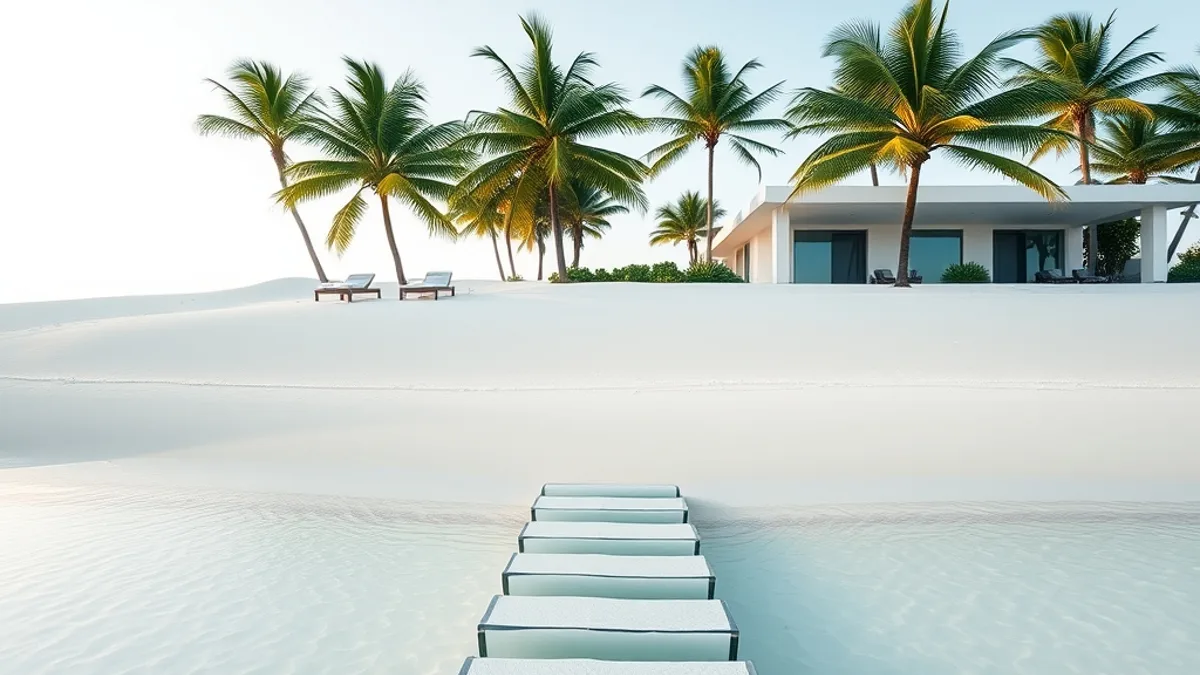
Access and Daily Logistics: Stairs, Paths and Parking
Access is where these two villa types feel most different in daily life. Cliffside properties commonly require anywhere from 80 to 200 steps to reach, or a steep switchback path, and that climb happens every time you arrive, leave, or haul groceries up for dinner. If you are packing for a week with two large suitcases, that last stretch of stairs becomes the defining detail of your stay.
Oceanfront villas flip that equation. Most offer vehicle access right up to, or very near, the front door, which makes arrivals, departures and supermarket runs straightforward. From the terrace to the waterline is typically a 2-minute walk on foot, so spontaneous swims and quick paddle sessions become effortless.
Before booking any cliffside villa, message the host directly and ask practical questions. Some properties have thought this through with real solutions; others expect you to manage on your own.
- Ask whether staff or a caretaker can carry luggage up on arrival and departure days, since many cliffside hosts offer this but only mention it if you ask.
- Check if the property has a funicular, cable car or driver-operated shuttle between the parking area and the villa; a handful of upscale cliffside rentals in steep destinations do.
- Confirm where the car actually parks at oceanfront villas, because some beach-level properties have secure on-site spots while others rely on a shared lot a short walk away.
- Ask about shared path access to the beach below a cliffside villa, since you may still pass neighbors on a communal stairway even if the villa itself feels private.
- Clarify grocery logistics, because a cliffside villa with an on-site cook or delivery service solves the problem, while one without them means climbing with bags every few days.
Privacy and Noise: Elevation as a Buffer
The biggest surprise for many first-time villa renters is how different the ambient noise levels are between the two positions. A cliffside villa is rarely passed by anyone. Beachgoers cannot wander past your terrace, and there is no coastal path running behind your loungers, so your pool and deck stay quiet from morning to night.
Oceanfront villas sit at the center of the action. You absorb beach noise, passing boat traffic and, in July and August, evening promenade activity that can run late. Music from beach bars carries across flat water, and shared stretches of sand mean strangers are often within a few meters of your lounge chairs.
The breeze advantage
Elevation brings a practical bonus beyond silence: airflow. Elevated positions catch sea breezes that sea-level structures often miss, which reduces the need for constant air conditioning during warm months. Many travelers find they sleep with doors open at cliffside villas, while sealed oceanfront rooms rely more heavily on climate control.
That said, sea-level stays feel more connected to local beach life, and that is exactly what some travelers want rather than avoid. If your ideal evening includes a stroll past beach cafés and volleyball games at sunset, the ambient energy of an oceanfront location is a feature, not a flaw. Decide whether you are escaping the crowds or joining them before you book.
Price and Booking Timing for Both Villa Types
Pricing between the two villa types is consistent enough across destinations that you can plan around it with reasonable confidence. Cliffside villas typically carry a 10-25% premium over comparable oceanfront units in the same area, a direct cost for the panorama and privacy described earlier. Peak season rates, meanwhile, run 30-60% above shoulder season for both types, which means your travel dates often matter more than the villa category itself. If budget is your main constraint, shifting your trip by a few weeks can save more money than switching villa types entirely.
Booking timing also differs between the two categories, and this is where many travelers get caught out. Cliffside inventory is usually smaller and more sought after for high season, since genuinely elevated properties with unobstructed views are limited in number on any coastline. That scarcity is why hosts recommend reserving earlier for cliffside stays than for sea-level ones. A few planning guidelines worth following:
- Cliffside high season: book 4-6 months ahead, since the limited number of genuinely elevated properties means the best-view units are taken first.
- Oceanfront high season: 3-4 months ahead is usually enough, as sea-level inventory tends to be larger in most resort destinations.
- Shoulder season stays: May-June and September-October offer the best value, with the added benefit of milder conditions for climbing cliffside steps and noticeably thinner crowds on shared paths and beaches.
- Rate comparison tip: when a cliffside quote looks steep, price an equivalent oceanfront unit nearby; if the gap exceeds the typical 10-25% premium, that property’s view is being priced at a premium beyond its category.
Finally, treat every quote as a starting point rather than a fixed number. Check current rates directly with hosts or booking platforms, since pricing shifts year to year and varies considerably by destination, property size and included services.
How to Choose Between Cliffside and Oceanfront for Your Trip
The simplest way to decide is to picture your actual days. If you will spend most of them on the terrace with a coffee and a camera, and you don’t mind daily stairs, cliffside is the stronger match. If you swim, paddle or beach-comb every day, the 2-minute water access of an oceanfront villa will define your trip far more than the view angle will.
Physical realities matter too. Travelers with knee issues, families with toddlers, or divers traveling with heavy gear should default to oceanfront, where a 2-minute walk gets you from villa to water without negotiating a long staircase in the midday heat. For inspiration on what an elevated stay can look like when done right, see these hillside retreats above the Andaman Sea.
Trip type and destination should reinforce each other. A few quick matches:
- Honeymoons: cliffside elevation delivers the sunset terrace and privacy that define a romantic trip, and stairs matter less for two fit adults.
- Photography trips: elevated positions capture the curve of the coastline and keep the horizon unobstructed at golden hour.
- Family trips: sea level wins, since kids move between pool, sand and shallow water all day without supervision across a switchback path.
- Watersports trips: oceanfront villas let you carry boards, tanks and paddles to the water in minutes instead of hauling them down 80-200 steps.
- Destination fit: dramatic coastlines like the Amalfi Coast or Santorini-style cliffs reward elevation, while flat reef lagoons in the Maldives-style atolls reward sea level, where the water itself is the main event.
Whichever direction you lean, match the villa to the landscape rather than forcing one style onto the wrong coastline, and the choice will feel obvious once you arrive.
The Bottom Line on Cliffside Villas vs Oceanfront Villas
The trade-off most travelers discover too late comes down to one thing: elevation. Cliffside villas deliver the wide panoramas, natural privacy and cooling breezes, but they ask for stairs and distance in return. Oceanfront villas put the water a 2-minute walk away and make arrivals painless, yet they trade height for more exposure to beach life.
So the choice is simple once you know your days. If they center on the view from the terrace, the typical 10-25% cliffside premium is money well spent — just book 4-6 months ahead for high season. If they center on time in the water, sea level wins, with 3-4 months of lead time usually enough. Neither villa type is better; they simply serve different trips. If this helped you decide, leave a comment or share the article with a travel partner.