The Garden Route has become one of South Africa’s most popular destinations for glamping, and it’s easy to see why. Luxury tented stays here put you steps from indigenous forest, quiet lakes and dramatic coastline, often with proper beds, en-suite bathrooms and outdoor decks. The challenge isn’t finding a great site — it’s knowing which stretch of this roughly 300 km corridor between Mossel Bay and Storms River suits you best, and which season matches the trip you have in mind.
This guide breaks the route down into its main glamping areas, from the beaches of Plettenberg Bay and the forested Tsitsikamma Coast to Knysna and the lakes district, plus the drier inland edge around Oudtshoorn. We’ll also walk through what each season actually feels like, what luxury tented stays typically cost per night for two, and how far ahead to book. By the end, you should know exactly where to base yourself and when to go.
Why the Garden Route Works So Well for Glamping
Few stretches of coastline lend themselves to sleeping under canvas quite like the Garden Route. The corridor runs roughly 300 km from Mossel Bay to Storms River, and within that single drivable route you get sandy beaches, a chain of lakes, thick indigenous forest and, if you cross the Outeniqua mountains, the semi-arid edge of the Karoo. That variety means a glamping trip here rarely feels one-note — you can wake up to the sound of the ocean one morning and fall asleep under dry, starry inland skies a day or two later.
A climate that suits canvas
The Garden Route enjoys a Mediterranean-style climate, which is unusual for South Africa. While much of the country’s interior swings between scorching summers and frosty winters, this coastal strip stays mild enough that living outdoors in a tented camp is comfortable for most of the year. Warm, dry summers and temperate shoulder seasons mean you can genuinely enjoy the deck, the outdoor bath or the braai rather than retreating indoors.
Infrastructure that makes it easy
Glamping only works well when the practical side runs smoothly, and the towns along the route deliver. George, Knysna and Plettenberg Bay are established tourism hubs with supermarkets, restaurants, medical services and plenty of activity operators. That means your tented stay doesn’t have to be an isolated retreat — you can spend the morning kayaking or hiking, then drive a short distance for a proper dinner and a bottle of local wine. It’s this combination of wild-feeling accommodation and easy access to good food, supplies and activities that makes the Garden Route such a natural fit for glamping.
Plettenberg Bay and the Tsitsikamma Coast
Where the coast meets the mountains
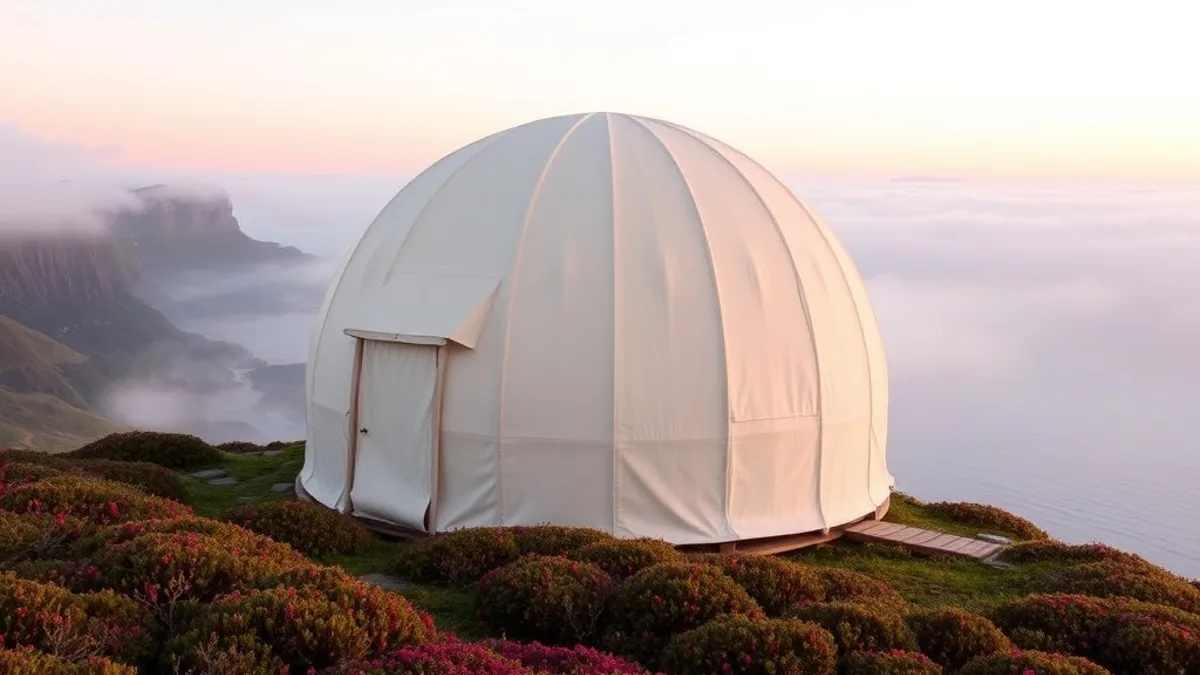
Plettenberg Bay is the pick for travelers who want the ocean front and center. The glamping options here — safari-style tents and geodesic domes — tend to sit on hillsides wrapped in fynbos, with decks that look out toward the Robberg Peninsula on one side and the Tsitsikamma mountains on the other. On a clear morning, watching the light move across the bay from the edge of your tent is hard to beat.
The location also puts you within easy reach of some of the route’s best activities. Southern right whales pass along this stretch of coast from June to November, often visible from headlands and viewpoints. Robberg Nature Reserve offers a proper coastal hike with seal colonies and dramatic cliff scenery, and the famous suspension bridges at Storms River are a short drive east through the Tsitsikamma section of the national park.
One thing to know before you pack
This is the wettest stretch of the Garden Route. Rain can arrive at any time of year, including the dry summer months that the rest of the route enjoys, so bring a waterproof layer and check that your tented camp has good cover for cooking or lounging. A dome or enclosed structure is a safer bet here than a more open canvas setup if rain is forecast. Even with the weather risk, the combination of beaches, forest and mountain views makes this area worth the extra layer in your bag.
Knysna and the Lakes District
Knysna sits at the green heart of the Garden Route, where indigenous forest runs right down to the edges of a wide, sheltered lagoon. This is the area to pick if your ideal days involve paddling a canoe across calm water in the morning, walking beneath yellowwood and fern-covered canopy in the afternoon, and ending up at the Heads viewpoint to watch the tide surge through the narrow sandstone channel that connects the lagoon to the ocean.
What glamping looks like here
Unlike the fynbos-covered slopes around Plettenberg Bay, glamping in the Knysna area leans heavily on safari-style tents tucked into the indigenous forest. Expect canvas under tall trees, dappled light, birdsong and that fresh, damp forest smell — with many camps positioned on smallholdings or forest edges roughly 10-20 minutes’ drive from town itself. That distance is part of the appeal, but it also means you’ll want your own vehicle for dinners in Knysna or grocery runs.
The setting also makes Knysna a practical middle-of-the-route base. Plettenberg Bay is about 35 km east — roughly a 30-minute drive — so Robberg, the beaches and the Tsitsikamma coast stay within easy reach. Head the other way and Mossel Bay sits roughly 100 km west, an straightforward leg if you’re arriving or departing via George. From a single forest tent, you can cover a large slice of the route without ever repacking.
One practical note: forest sites hold shade and moisture, so even in the warm high season, evenings under the canopy can feel cooler than the daytime numbers suggest. Check whether your tent includes heating or extra blankets before you book, especially for stays in the shoulder months.
Mossel Bay, George and the Oudtshoorn Inland Edge
The western end of the Garden Route is the easygoing option. Mossel Bay and George sit in a rain shadow that keeps them milder and drier than the wetter stretches further east, so outdoor living feels comfortable for more of the year. George also has the route’s main airport, which makes it a practical landing point if you’re flying in from Cape Town or Johannesburg and want to start your tented stay without a long transfer.
The inland Karoo edge
Cross the Outeniqua mountains and the landscape changes fast. Oudtshoorn, about 60 km from George, sits on the semi-arid edge of the Karoo, where wide skies and minimal light pollution make for some of the best stargazing you’ll find near the coast. Tented camps out here lean into it, often positioning decks and fire pits for clear night-sky views.
Inland glamping also works well as a base for day trips. The Cango Caves are a short drive away and make an easy half-day outing, and the area’s ostrich farms are a classic Garden Route side trip that kids tend to love. Pair two or three nights inland with time on the coast and you get forest, beach and desert-edge scenery in a single trip.
When to Go: Seasons on the Garden Route
The Garden Route is one of the few parts of South Africa where canvas living works most of the year, but the seasons still shape the experience in ways that matter. Summer brings the beach weather, autumn and spring bring value and green landscapes, and winter brings whales along the coast. Picking the right window depends on what you want from your trip, whether that’s long days on the sand, quieter trails, or wildlife sightings from your tent deck. Here’s how to think about each one.
- November to March: Expect dry, warm days of 20-28°C, ideal for open safari tents, lagoon paddling and beach time. December and January are the busiest weeks of the year, so book 3-6 months ahead if you have your heart set on a specific camp.
- April-May and September-October: Mild days, fresh green scenery after the rains and rates roughly 20-30% below peak. Forest walks feel at their best in these months, and you’ll share viewpoints and restaurants with far fewer people. This is the sweet spot for travelers who want comfort without crowds.
- June to August: Southern right whales pass along the coast, often visible from headlands and sometimes even from camp, and prices drop to their lowest. Temperatures sit around 8-18°C, and the Tsitsikamma area gets most of its rain in these months, so canvas stays can feel damp. Choose an enclosed tent or dome if you travel then.
Whichever window you pick, it pays to plan around what each season does best. Beach lovers should aim for high summer, photographers and value hunters for the shoulder months, and whale watchers for winter. If a specific tented camp matters to you, check its availability early regardless of season. Smaller properties with only a handful of tents fill up quickly, especially over South African school holidays, when local families travel too. A flexible midweek arrival can also make a popular camp reachable when weekends are full.
How to Choose and Book the Right Glamping Stay
Not all glamping on the Garden Route is the same product, and the biggest mistake is booking a stay type that fights the season. An open safari tent with mesh windows is wonderful on a dry February night, far less so in the middle of a wet Tsitsikamma winter. Before you book, think about how enclosed the structure is, how much of the living space is under canvas versus under a solid roof, and how it will feel in the conditions you’re realistically going to get. A dome or a tent on a permanent deck with proper walls handles rain very differently from a lightweight safari-style setup.
Price is a decent guide to what you’ll get. Expect roughly ZAR 2,500-8,000 per night for two people, with the upper end usually buying private decks, outdoor baths or lagoon views. But don’t assume the most expensive option is automatically the most comfortable — some mid-range tented camps handle cold and wet weather better than pricier ones that prioritize views. Beyond the scenery, the details that matter most are what’s included in the rate and how the tent performs on a chilly evening.
- Catering style: Self-catering tented camps give you a kitchenette or braai area but no restaurant, so plan groceries in advance — the nearest decent shop can be a drive away, and you don’t want to arrive hungry at 7 pm with an empty fridge. Full-service lodges include meals and often guided activities, which changes both the cost and the rhythm of your stay.
- Cold-night comfort: Ask specifically about heating, insulation, extra blankets or hot-water bottles in April-May and September-October, when evenings cool down noticeably even after mild, pleasant days.
- Booking lead time: One to two months ahead is often enough in shoulder season, but December-January dates over the summer holidays fill quickly — reserve those as early as you can.
A quick message to the property before booking clears up most of this. Ask about the tent’s orientation, wind exposure, bathroom setup and what happens on a rainy day — do you have a covered veranda, an indoor lounge, or nothing? The answers tell you more than any photo gallery does, and responsive hosts are usually a good sign of how well the property is run overall.
Planning Your Garden Route Glamping Trip
The Garden Route packs coast, forest and semi-arid landscapes into one drivable stretch, and each stretch suits a different kind of glamping trip. If your dream involves beaches and ocean views, the Tsitsikamma coast near Plettenberg Bay is the natural base. If you picture forest walks and lagoon mornings, Knysna and the Lakes District fit better. And if star-filled skies appeal more than surf, the inland Karoo edge beyond the Outeniqua mountains is where you should look.
Timing shapes the experience just as much. Summer brings proper beach weather, the shoulder months offer mild days and better value, and winter rewards travelers with whale season at the cost of rain. Once you have matched an area, a season and a stay type — and booked early enough for the dates you want — a Garden Route glamping trip tends to come together with little friction. If this helped you plan, leave a comment or share the article.