A room that feels fine for two nights can become miserable after three weeks, and most travelers only realize this after they have already paid. There is nowhere to put your clothes, no way to cook anything, and the hum of the elevator runs through the wall all night. A hotel for a long stay needs more than a comfortable bed, and the difference between a good and bad choice compounds every single day you are there.
This guide walks through what actually matters when you are booking for a week or longer. We will cover how to judge whether a room is built for living rather than just sleeping, what level of kitchen access suits your trip length, why laundry options decide your daily comfort, and how to secure weekly and monthly discounts. We will also list the questions to ask before you commit, how to match the property type to your trip, and finish with a short checklist you can use at booking time.
What Makes a Hotel Work as a Hotel for a Long Stay
After a few nights, a hotel stop being a place to sleep and becomes a place to live. That shifts the priorities completely. Storage, workspace and quiet matter more than lobby design or a rooftop bar, because you will feel their absence every day. Before booking, look for a proper desk for working, enough wardrobe or drawer space that you are not living out of a suitcase on the floor, and a room positioned away from the lifts and ice machines. Ask for a quiet corner or high floor when you reserve; on a long stay, hallway noise wears you down far more than it does on a weekend trip.
Room type matters more the longer you stay
For stays of 14 nights or more, suites and aparthotel rooms usually work better than standard rooms. The reason is simple: separate sleeping and living zones let one person rest while the other works or watches television, and they give your belongings somewhere to go beyond the bed. A standard room that feels generous on night two can feel like a storage closet by night ten.
Pricing is the other thing to understand early. Standard hotels typically price per night, while extended-stay brands often quote weekly or monthly rates that work quite differently. Check which structure you are dealing with before comparing prices, because a nightly rate that looks cheap can add up to far more than a weekly rate at a property designed for longer visits.
Kitchen Access: From Full Kitchen to Kettle-Only
Kitchen access is where long-stay hotels separate themselves from ordinary ones, and the level you need depends on how long you are staying. A full kitchen with a fridge, hob, oven and cookware suits stays of 14 nights or more, when cooking real meals becomes both practical and a genuine money-saver. A kitchenette with a microwave and hot plate covers the middle ground of 7 to 13 nights, enough for breakfasts, simple dinners and leftovers without needing a full oven. If your stay is shorter than a week, a kettle and mini-bar fridge may honestly be all you need, so do not pay a premium for equipment you will never switch on.
The savings add up quickly. Eating even half your meals in can save $20-40 per day in mid-priced city destinations, which over two weeks covers a meaningful chunk of the room rate itself. Even breakfasts alone make a difference: a hotel breakfast or a café pastry each morning can quietly cost more than a week’s groceries.
- Ask exactly what “kitchen” means at the property you are booking: some list a kitchenette but provide only a kettle and a mini-bar fridge, which changes your plans entirely. A practical minimum setup includes a fridge, microwave, hob or hot plate, sink and basic cookware.
- Confirm whether cookware, plates and utensils are provided in the room or available on request from housekeeping, and whether there is a charge for the set.
- Check if the kitchen is in your room or shared with other guests on the floor, since a shared kitchen means planning meals around other people’s schedules.
- Look for a sink in or near the kitchenette; washing dishes in the bathroom sink gets old by the second week. A small supermarket or grocery store within easy walking distance matters just as much as the kitchen itself.
Laundry Options and Why They Decide Comfort
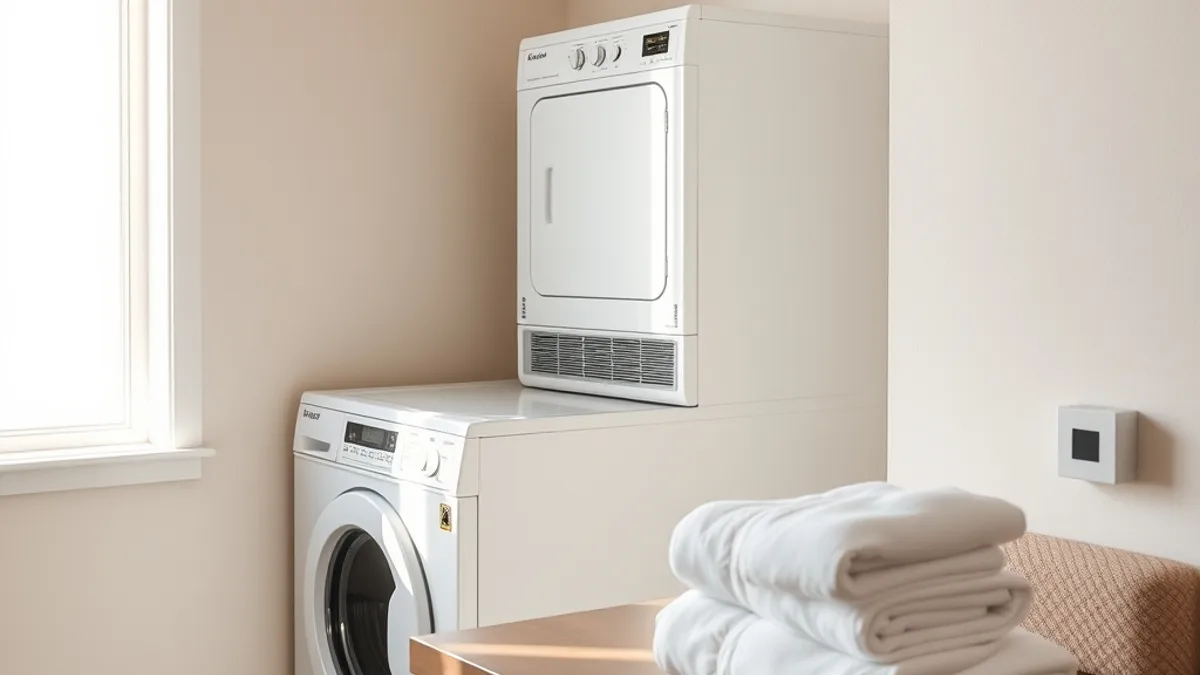
Laundry is the least glamorous part of a long stay and the one that most affects how you feel by week two. The gold standard is an in-room washer-dryer or free guest laundry on-site, both common at aparthotels and extended-stay brands. With that, you can run a load in the evening and forget about it, which matters enormously when you are packing for weeks rather than days.
When laundry costs money
Paid on-site machines at $3-5 per wash are still perfectly workable, especially if the machines are available around the clock rather than limited to housekeeping hours. For stays over two weeks, laundry access can save roughly $15-30 per load compared with outsourcing to a service, and a traveler washing every few days will feel that difference in the total bill.
If the hotel has no laundry at all, do not rule it out automatically, but do check the map before booking. Look for a laundromat within a 10-minute walk, and read recent reviews to confirm it is open at hours that suit you. A self-service laundromat two blocks away is a minor inconvenience; the nearest one being a bus ride across town turns a simple chore into half a morning. Whatever the setup, knowing the answer before you arrive means packing the right amount and avoiding a frantic search on day three.
How to Get Weekly and Monthly Discounts
Long-stay pricing works differently from ordinary hotel pricing, and the savings can be substantial if you know how to ask. Weekly rates typically run 15-30% below the nightly rate for stays of 7 nights or more, and monthly extended-stay discounts of 30-50% are common at aparthotels and residence brands. That difference compounds quickly: over a month, it can add up to the cost of several free nights. The trick is knowing who to contact, what to ask for, and when to book.
- Count your nights first. If your stay is 7 nights or more, you are usually in weekly-rate territory, so never book seven separate nightly rates without checking the weekly option first. The longer your stay, the bigger the gap between the two pricing structures, and the more a quick email can save you.
- Contact the hotel directly. Booking engines rarely show extended-stay pricing, because they are built around nightly inventory. Call or email the property itself for stays of 7+ nights and ask specifically about weekly and monthly rates rather than just the best available nightly rate. Smaller properties often have more flexibility here than large chains.
- Ask for a written rate quote covering the full stay length. A verbal promise of a discount is hard to enforce at check-in. A written quote protects you if staff change, systems update, or the rate is questioned when you arrive with your bags in the lobby.
- Book 4-8 weeks ahead. This window gives you the widest choice of discounted room types. Kitchenettes and suites are the rooms most often discounted for long stays, and they are also the first to sell out, so early booking matters more here than it does for a weekend trip.
- Compare two or three properties side by side. Ask each one the same questions and put the quotes next to each other. A property offering 40% off may still cost more overall than one offering 25% off from a lower base rate, so always compare the final total, not the percentage.
One more habit worth building: reconfirm your rate a week before arrival. A short email takes two minutes and gives the hotel a chance to fix any problem before you show up. Bring the written quote with you, either printed or on your phone, so any discrepancy can be sorted out at the desk in minutes rather than argued over after a long flight. It is a small step, but it is the one that keeps your discount intact.
Questions to Ask Before You Commit
A long-stay booking is closer to a small lease than a vacation reservation, so the details you would never think to ask about on a two-night trip suddenly matter. Before you pay anything, get clear answers on housekeeping, deposits, utilities and flexibility. A hotel that dodges these questions is telling you something, and it costs nothing to walk away before you commit.
- Housekeeping frequency and inclusion. Ask whether cleaning is daily, weekly or on request, and whether it is included in the long-stay rate. On stays of 14+ nights this matters most: a weekly clean that looked included can turn out to be an add-on, and some extended-stay brands charge separately for towel changes beyond a baseline. Also ask what happens if your cleaning day lands on a public holiday or a fully booked weekend.
- Deposit and cancellation terms. Long bookings often carry larger deposits or longer cancellation windows than standard reservations. Ask exactly when your card is charged, how long a refund takes, and whether the deposit is held or actually taken. A held pre-authorization and a real charge behave very differently if plans fall through.
- Utility and Wi-Fi caps. Some extended-stay rates include utilities up to a cap, with overage charges beyond it. Ask whether electricity, water and Wi-Fi are unlimited, and if not, what a typical month of usage costs so you are not surprised by the bill. If you plan to work from the room, confirm the Wi-Fi speed and whether it is throttled on long-stay plans.
- Flexibility to extend or cut the stay short. Plans change, especially on work trips. Ask whether the discounted rate holds if you add a week, and what penalty applies if you leave early. Some properties will reprice your whole stay at the nightly rate if you shorten it, which can wipe out your savings entirely.
Put the answers in an email rather than relying on a phone call. A short written summary from the hotel gives you something to point to at check-in, and it takes the front desk two minutes to send. Bring a printed copy or save it offline, since you may need it before you have working Wi-Fi. If a property refuses to put basic terms in writing, treat that as your answer and move on to the next option.
Matching the Stay Type to Your Trip
Not every long stay needs the same kind of base, and picking the wrong property type is one of the costliest mistakes you can make over a multi-week trip. The right match depends less on star ratings and more on how you will actually spend your days.
Work trips and slow leisure trips
For work assignments of 2-8 weeks, aparthotels and residence hotels are hard to beat. You get a separate living zone, a real desk, and enough storage to unpack properly instead of rummaging through a suitcase on the floor. Housekeeping and front-desk support stay available, which matters when you are tired after a long working day. Resort-style properties, on the other hand, suit slower leisure stays: if your plan is long breakfasts, pool afternoons and few commitments, the on-site restaurants and facilities earn their keep in a way they never would on a work trip.
Location first, amenities second
Over weeks rather than days, location beats amenities almost every time. Pick a base with groceries and transport within a 15-minute walk, because a beautiful rooftop bar gets old fast if the nearest supermarket is a bus ride away. Walk the neighborhood on a map before booking and check where you will buy coffee, fruit and laundry detergent, since those small errands define daily life on a long stay.
For scenic slow-travel destinations, it is also worth comparing private rentals with kitchens, which can rival hotels on price for stays of 14+ nights. In wine regions, for example, a rental among the vines can offer the same kitchen and laundry advantages as an aparthotel, with more space and quieter mornings. Our guide to Mendoza wine-country stays with vineyard mornings and scenic silence shows what that kind of base looks like in practice. Whichever route you take, weigh the total cost over the full stay, not the nightly headline rate.
The Long-Stay Checklist in Brief
A room that feels fine for two nights can turn miserable after three weeks, and the difference almost always comes down to the basics: kitchen access, laundry and enough storage to actually live there. Sort those three out first, then worry about everything else.
The rest follows quickly. Negotiate weekly or monthly rates directly with the hotel and get the quote in writing, book 4-8 weeks ahead so discounted room types are still open, and confirm housekeeping and cancellation terms before you pay anything. Do that, and your long stay works; skip it, and you will likely pay for the mistake for weeks. If this helped you plan a trip, leave a comment or share the article.