Booking a hotel room without studying the hotel floor plan is a gamble. You pick a beautiful photo, confirm the price, and arrive to discover your window overlooks the parking lot, the ice machine hums through the wall, and the elevator chimes every few minutes a few steps from your headboard. The room itself may be perfect; its location on the floor is what ruins the stay.
A few minutes with a property’s layout changes all of that. In this guide, we explain why a plan tells you more than any room photo, how to decode view orientation and corner rooms, where to position yourself relative to elevators and long corridors, and how to map noise from bars, pools, roads and mechanical rooms. We also cover how to turn your reading into an actual room assignment, and which red flags matter most at resorts, city hotels, boutique inns and waterfront stays. Two minutes of preparation can buy you weeks’ worth of better sleep.
Why Reading a Hotel Floor Plan Beats Any Room Photo
Room photos are marketing tools, and they do their job well. They show you the bed, the lighting, the bathroom tiles, maybe a glimpse of the view. What they never show is what sits on the other side of your wall: the elevator shaft, the ice machine, the housekeeping closet, or the couple in the adjoining room with a different idea of bedtime.
What a floor plan actually reveals
A hotel floor plan exposes the variables that decide whether you sleep well. You can see which direction your window faces, how long the corridor is between the elevator and your door, and whether your room backs onto a stairwell, a service area or a blank mechanical block. None of this appears in a staged photo, yet all of it shapes your stay more than thread count ever will.
The most common check-in complaint is simple: unexpected noise. Guests rarely complain that the bed was too soft or the towels too thin, but they do complain about dinging elevators, rolling luggage and bass from a bar two floors down. Nearly all of that noise is predictable from a plan. Spend two minutes studying the layout before you book or request a room, and you can sidestep the problem entirely instead of negotiating a swap at midnight.
Views: Decoding Orientation and What Your Window Actually Faces
Start by finding the compass orientation on the plan, or working it out from the street names and the entrance. Then match it to the destination. At a beach resort, a sea-facing room is the whole point, while a parking-lot-facing room is the same money spent on a worse morning. In a city, you might prefer a courtyard side for quiet, but make that choice deliberately rather than by accident. If you’re comparing coastal properties, it helps to see how much a genuine sea view changes the experience, as in these Marbella hotels with sea breezes and private pools.
Corner rooms and the price of height
Corner rooms, often numbered 01, 05, 11 or 15, have windows on two sides, which means wider sightlines, better natural light and cross views you won’t get from a standard room. They’re usually the first rooms to sell out, so request them early.
Height costs money. High-floor view rooms typically carry a surcharge of around 10-30% over standard rooms, but the view from a given side is often similar across floors. A mid-floor room on the same wing frequently shares the same sightline for noticeably less, so check which side it’s on before paying for the top.
Finally, read the fine print on “city views.” Some plans show rooms facing inner courtyards or narrow light wells that get marketed as city views. On the plan, look for whether your window faces open space toward the street or water, or a walled void in the middle of the building. The difference is easy to spot once you know to look.
Elevators and Corridors: Finding the Distance Sweet Spot
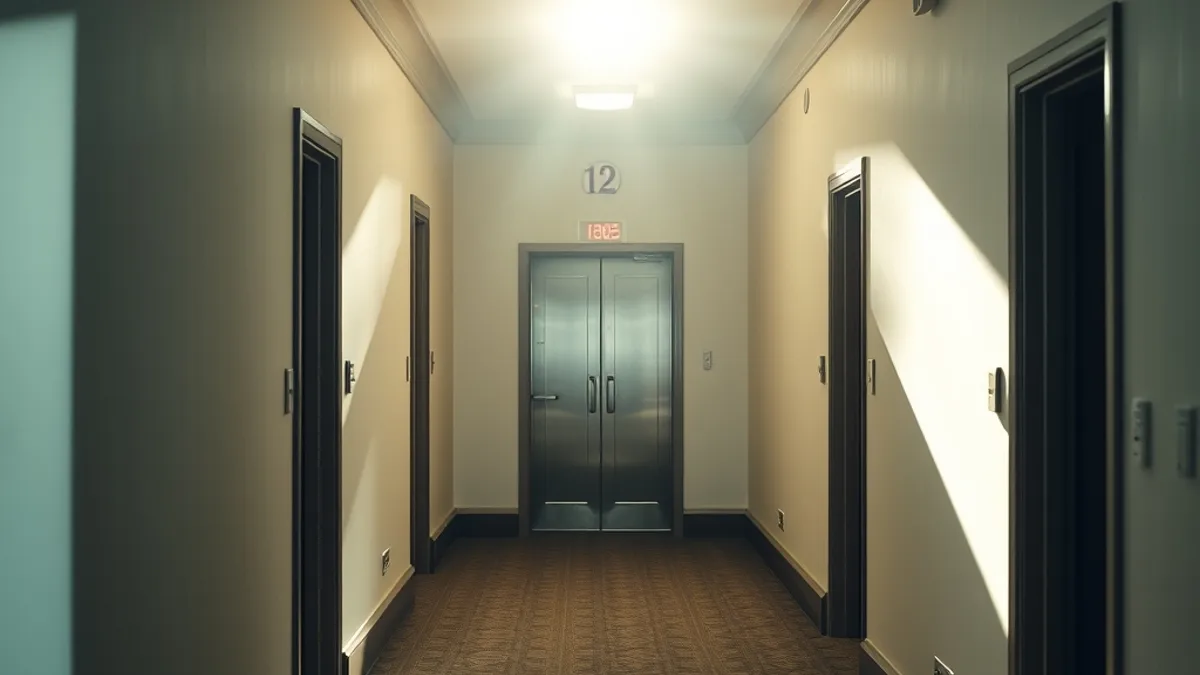
Rooms directly opposite the elevators take the worst of it: dinging chimes, the whoosh of doors, and rolling luggage clattering past at all hours. The sweet spot is 2-3 doors down the corridor. You keep the short walk from the elevator but gain a buffer of neighboring doors that absorbs most of the traffic noise.
The far end of a long corridor is the opposite trade-off. Typical hotel floors hold 20-30 rooms per corridor, and a room at the end can mean a long haul with luggage every time you come and go. In exchange, you get maximum quiet, since almost no one walks past your door by accident. If you travel with heavy bags or have mobility concerns, weigh that walk honestly.
Room numbers tell you more than position alone. Rooms ending in 01-04 often sit near service areas or elevators, which can mean early-morning carts and staff chatter. Before you commit, check what else shares your stretch of the floor:
- Stairwell doors next to your room open with a heavy clunk, and guests use them to skip the elevator wait, especially late at night.
- Housekeeping closets at corridor midpoints mean carts parked outside your door from early morning onward on turnover days.
- Ice and vending alcoves draw foot traffic and the rumble of the machine itself, which cycles on and off around the clock.
- Fire exit doors at corridor ends are often propped open in warm weather, letting hallway noise and corridor light leak toward nearby rooms.
Noise Mapping: Bars, Pools, Roads and Mechanical Rooms
Once you know where your room sits, the next question is what surrounds it. Noise rarely comes from where you expect it. It travels vertically through floors as much as horizontally along corridors, which is why a room two floors above a lively bar can be just as loud as one next door.
Height matters more than most travelers realize. Rooms on floors 3-7 sit high enough to escape most street traffic, bus brakes and delivery trucks, yet low enough to stay below the rooftop bars and pool decks that generate late-night sound at the top of the building. This middle band is often the quietest part of any hotel.
Watch what sits above and beside you
Amenity floors are the classic trap. Restaurants, bars, gyms and pool pump rooms appear on many plans, and a room directly above or beside any of them will carry that sound through the structure. Pool pump rooms in particular hum around the clock, not just during swimming hours. Kitchens also run extraction fans and deliveries long before breakfast service starts.
Which side of the building your wing occupies matters too. Roadside wings absorb traffic, sirens and honking all night, while courtyard-facing wings on the same floor are noticeably calmer. Compare the plan against a map so you know exactly where the street touches the property.
Finally, learn to read the unlabeled blocks. Elevator shafts, laundry rooms and kitchen exhausts usually show up as blank or unnamed rectangles on floor plans. Treat any featureless block next to your candidate room as a likely mechanical space and pick a room elsewhere on the floor.
How to Get the Room You Decoded: Requests and Timing
Decoding the floor plan only pays off if the request actually reaches the hotel. A perfect room number identified weeks in advance is useless if nobody at the property ever sees it. Getting a specific room is a process, and timing each step correctly matters more than any polite phrasing ever will. The good news is that the whole sequence takes little effort: one note at booking, one short call before arrival, and two minutes of attention at the desk.
- Write the request into the reservation. When booking a peak-season stay, add your floor, wing and view preferences to the reservation notes 4-8 weeks ahead. Written requests become part of your file that front desk and housekeeping teams see when they assign rooms. Verbal wishes mentioned at check-in, by contrast, arrive after the board is mostly set.
- Call 2-3 days before arrival. Phone the hotel and ask them to confirm the specific room number, not just the category. Room numbers are assigned when housekeeping finalizes the board, so a call at this point catches the assignment while changes are still easy. Mention your requested room number directly and ask whether it is available.
- Ask for the floor plan at check-in. Request a plan of your actual floor and look at it before accepting the key. Front desks can often swap you into a better-positioned room within the same category on the spot, especially early in the day when inventory is still open. Arriving before the standard check-in rush makes a swap far more likely.
- Use status and timing to your advantage. Loyalty status and midweek stays both raise the odds of corner and high-floor rooms, since those dates leave more of the premium inventory unclaimed. If you have flexibility, shifting a stay by a single night can change what is realistically available.
None of these steps guarantees a specific room, since occupancy and operational needs decide the final board. Hotels oversell, groups arrive unexpectedly, and maintenance issues can pull rooms at short notice. But travelers who follow the sequence consistently end up in better-positioned rooms than those who simply hope for an upgrade at the desk. The pattern holds across city hotels, resorts and boutique properties alike: the earlier a preference lands in writing, the better the odds it survives to arrival day.
Floor Plan Red Flags by Stay Type
The same floor plan reads differently depending on where you are staying. A layout that signals a quiet city room can hide a very different set of problems at a beach resort, so it pays to adjust what you look for before you book. The symbols and labels stay the same, but the risks shift with the property type.
At large properties, the plan is often the only way to understand the layout at all, since resorts can spread across several buildings and long stretches of grounds. In compact city hotels and small inns, the challenge is the opposite: everything is close together, so adjacency is the main risk. Before you commit, run through the checks that match your stay type:
- Resorts: trace the walking route from your room to the pool deck and the evening entertainment stage. A room marketed as poolside puts you within earshot of daytime activities and amplified music after dark, while a room in a quieter building may trade a longer walk for real evening calm.
- City hotels: verify the plan against a street map to see which wing touches the road. Ground-floor and low-floor rooms on the street side also absorb noise from the entrance, taxis and any bar at street level.
- Boutique inns: small properties often have shared walls between nearly every room, and compact plans make this easy to miss. Look for rooms whose doors are offset from the neighbors’ doors, since aligned doors mean beds and conversation sit directly across a thin wall.
- Coastal and lakeside stays: confirm which rooms genuinely face the water rather than the access road. Many “waterfront” properties have a road between the building and the shore, and only a plan or a direct question to the hotel will tell you which side your window is on.
It also helps to match the plan to the season of your trip. A resort wing that looks peaceful on paper in low season may sit beside a kids’ club or event lawn that operates at full capacity during school holidays, and a city hotel near a stadium or convention center can change character entirely when big events are on. If you are unsure what sits on an unlabeled block or an unlabeled adjacent lot, a short email to the property usually gets a straight answer.
Ten minutes of checking against the right plan for your stay type prevents the most expensive kind of mistake: paying for a location you never actually received. The extra effort is small, and the payoff is a room that matches the picture in your head, not just the one on the booking page.
The Takeaway: Two Minutes with a Plan, Weeks of Better Sleep
Room photos sell the bed, the lighting and the marble bathroom. What no photo can capture is your neighbor on the other side of the wall: the elevator shaft, the ice machine, the rooftop bar or a parking lot where you expected the sea. That gap between the image and reality is where most check-in disappointments come from.
A floor plan tells you the truth in about two minutes. It exposes the neighbors, the noise sources and the real view, so you can aim for a room 2-3 doors from the elevator, on floors 3-7, or in a corner room with windows on two sides. Then lock in your requests 4-8 weeks ahead for peak-season stays and confirm by phone 2-3 days before arrival. Do that, and you trade a gamble for a plan. If this helped you pick a better room, share it or leave a comment below.