You never touched the minibar, yet there it is on your checkout bill: a €12 charge for cashews you didn’t know existed. If this has happened to you, you’re not alone. Modern hotel minibar costs catch out even careful travelers, thanks to sensor shelves that log a charge the moment an item is lifted — sometimes in under a minute.
This guide explains what minibar items typically cost, how the billing technology works and why charges appear by mistake. You’ll also find simple habits that prevent surprise fees, cheaper ways to stock your room with drinks, advice on checking and disputing a wrong charge, and a few etiquette notes for suites and luxury stays. By the end, that little fridge will stop being a trap and start being just a fridge.
What a Hotel Minibar Really Costs
The first thing to understand about hotel minibar costs is that you’re paying for convenience, not value. A small bottle of soft drink typically runs €3–6, which is roughly double or even triple what the same bottle costs at a store around the corner. That markup is standard across most hotels, from city business properties to beach resorts.
Beer, spirits and snacks
Alcohol carries an even steeper premium. A small bottle of beer from the minibar usually costs €5–9, while spirits and snack items commonly range from €6–15 per serving or packet. A couple of evening drinks and a bag of nuts can quietly add €25 or more to your bill over a few nights.
Check the price card first</h3
Every minibar should have a price card inside the fridge or mounted beside it, listing the cost of each item. Read it before you open anything, even if you’re only curious. In some hotels, prices vary between room categories, so the card in your room is the one that counts. A quick ten-second glance at arrival tells you exactly what you’d be paying — and makes it much easier to spot an incorrect charge later if one appears on your bill.
How Minibar Billing Works and Why Charges Appear by Mistake
If you’ve ever been charged for a minibar item you never consumed, the technology is usually to blame. Most modern minibars don’t rely on staff opening the fridge and counting bottles. Instead, they use automated systems that register removal — and removal is often all it takes to trigger a charge.
Weight sensors and their quirks
The most common system uses weight-sensor shelves. Each shelf detects when an item is lifted, and if it stays off the sensor for roughly 20–60 seconds, the minibar registers it as consumed and logs the charge automatically. Set the bottle back down quickly and you may be fine — but take your time deciding, and you’ve bought it.
Barcodes, infrared and delayed charges
Barcode and infrared systems are no more forgiving. They can misfire when you simply move an item aside to reach something behind it, or when you rearrange bottles to fit your own purchases. From the system’s perspective, an item that changed position looks like an item that left the fridge.
There’s also a timing issue worth knowing about. Restocking staff check rooms during their daily rounds and log anything missing or displaced. That means a charge can appear on your bill a full day after the moment it was supposedly triggered — often when you’ve long forgotten you even opened the fridge door.
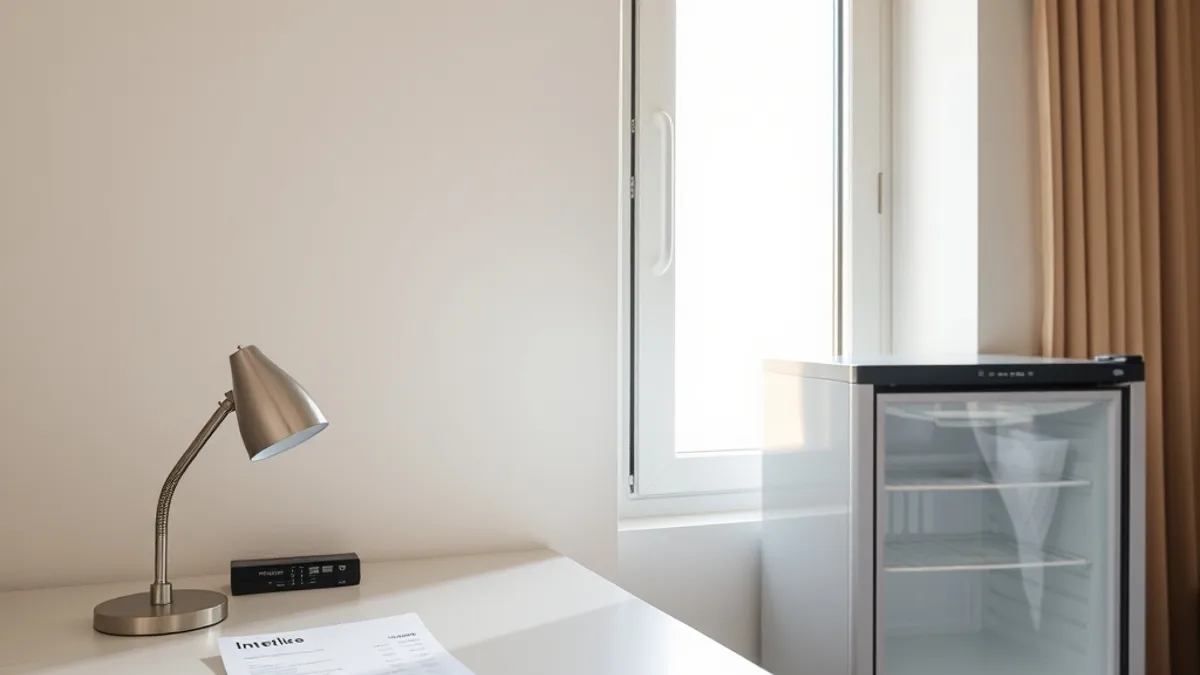
Simple Habits That Prevent Surprise Minibar Charges
The good news is that avoiding surprise minibar charges takes almost no effort. It comes down to a few habits you can build into your arrival routine, starting the moment you reach the front desk. None of these steps cost anything, and together they take less than five minutes of your check-in time. Travelers who skip them are the ones most likely to find a puzzling drink charge on their bill at the end of a stay.
The single most effective move is to ask at check-in for the minibar to be emptied or unplugged. Most hotels will do this without hesitation, and it removes most of the risk entirely — no sensors, no restocking logs, no charges. If you’d rather keep the fridge, treat it as display-only and keep the price card where you can see it. This works especially well on longer stays, where an untouched minibar sitting in your room for a week gives a sensor system far more chances to misfire.
- Ask for a written confirmation. If the minibar is emptied or unplugged on request, a quick note from the front desk (or a mention in your reservation) makes it easy to contest any charge that still appears.
- Photograph the fridge on arrival. A timestamped phone photo of the untouched minibar and its price card gives you solid evidence if a sensor error shows up on your bill later.
- Keep the fridge door closed between uses. Repeated opening and closing can nudge items on sensor shelves, and some systems log a charge after enough small movements.
One rule matters more than any other: never use the minibar as a shelf for your own food or drinks. The sensors can’t tell the difference between your water bottle and the hotel’s, so your own purchases can end up billed at minibar prices. If you need cold storage for snacks or drinks you brought yourself, ask the front desk whether an empty fridge or a separate mini fridge can be provided instead. It’s a common request, and most properties are happy to help once you explain why.
Cheaper Alternatives to the Minibar
Shop for drinks like a local
The easiest way to avoid minibar prices is to simply not use it. A supermarket or convenience store usually sells the same soft drinks, water and beer that sit behind that tiny fridge door, and the savings are significant. Store-bought drinks typically cost 50–70% less than their minibar equivalents, which adds up quickly over a multi-night stay.
On arrival day, pick up a few bottles of water, your favorite soda and maybe a snack for the room. Even in city-center neighborhoods, you’ll rarely walk more than a few minutes to find a convenience store. If your room has no usable fridge, ask at the front desk — many hotels will lend you one, especially if you mention medication that needs cooling. Kettles and ice are also commonly provided free on request, so a cup of tea or a cold drink rarely requires the minibar at all.
Step outside for your coffee and cocktails
The hotel bar is convenient, but it’s rarely the best deal in the neighborhood. Nearby cafés and bars often serve the same soft drinks, coffee, beer and wine for noticeably less, particularly anywhere outside the hotel’s own lounge. A morning espresso two doors down will usually cost a fraction of what room service or the minibar charges.
Ask the front desk or a concierge where locals actually go — they’ll happily point you to a good café or a relaxed bar within a short walk. You’ll often get a better atmosphere, a better price and a little taste of the neighborhood thrown in. Reserve the minibar for the moments when convenience genuinely matters, like a midnight craving when nothing else is open, and let the shops and cafés cover the rest of your stay.
Checking Your Bill and Disputing a Wrong Charge
Even careful travelers occasionally find a phantom minibar charge on their folio. It happens more often than you’d think: weight sensors can register an item as consumed within 20–60 seconds of it being lifted, so simply rearranging the fridge can trigger a charge you never earned. The good news is that these errors are easy to fix, as long as you catch them early and handle the conversation calmly. The key is timing. Give yourself a relaxed evening to review your bill instead of scrambling at a busy checkout desk, when you’re juggling luggage, a shuttle and a departure time all at once.
- Check your bill the night before checkout. Drop by the front desk or use the in-room TV or app to pull up your itemized folio the evening before you leave. Scanning it while you’re relaxed gives you time to spot anything odd, rather than negotiating a charge at 7 a.m. with a taxi waiting outside. If something looks wrong, you’ll also have the night to find your own notes or receipts.
- Question any minibar line item you don’t recognize. If the folio shows two beers when you drank none, raise it at the front desk before you pay. Bring up the specific item and date, and stay polite but firm — a simple “I didn’t take anything from the fridge” is usually enough to start the correction. Ask the staff to check restocking records if the charge seems tied to a sensor log.
- Use your room as evidence if needed. If a sensor error is being argued, keep your room tidy and the minibar untouched so staff can verify the stock themselves. An intact, neatly arranged fridge makes it obvious nothing was consumed, and it strengthens your case considerably. Offer to walk a staff member up to the room so they can see it in person.
In most cases, disputed minibar charges are reversed at the front desk when raised before checkout, so acting early genuinely matters. Hotels deal with these mix-ups regularly and would rather correct the bill quickly than argue over the price of a soda. Check the revised folio before signing anything, keep a copy if you’re paying by card, and you’ll walk out with your money — and your mood — intact.
Minibar Etiquette in Suites and Luxury Stays
When the minibar is actually free
Not every minibar is designed to charge you. Some upscale suites include a complimentary soft minibar, where the water, soda and juice are genuinely part of the room rate. The trap is assuming this applies to your room. Policies vary not just between hotels but between room categories in the same hotel, so confirm at check-in exactly what’s included before you open anything.
A quick question at the desk — “is the minibar in this suite complimentary, and if so, which items?” — takes ten seconds and removes all the guesswork. Staff would much rather answer it than process a disputed charge at checkout.
Villas, residences and the stocked pantry
Villa and residence stays often come with a stocked pantry or kitchen instead of a traditional minibar, and the billing rules can be less obvious. Items may be billed individually, bundled as a package, or included in the rate depending on the property. Ask on arrival how the pantry works and which items carry a charge, and note it down so everyone traveling with you knows the rules too.
One more detail worth checking: complimentary water bottles are often separate from the paid minibar. Many hotels place a free bottle or two on the desk or bedside table while the fridge holds charged ones. Check the labels or the price card before drinking — a bottle marked with a price is a bottle that will appear on your bill, no matter where it sits in the room.
The Takeaway on Minibar Costs
That €12 cashew charge on your bill usually comes down to one thing: a sensor logged the item within 20–60 seconds of it being lifted, even if you never ate it. Minibar items typically cost €3–15, so a handful of accidental triggers can add up quickly by checkout morning.
The good news is that prevention is simple. Emptying the fridge at check-in and reviewing your bill the night before checkout prevent nearly all surprises, while store-bought drinks and a quick price-card check keep small room-fridge costs under control. Have you ever been charged for something you never touched? Share your story or this article in the comments below.