If you can’t swim — or simply don’t enjoy deep water — booking a beach holiday can feel like an afterthought. Most resort marketing assumes every guest wants to plunge into a pool or the sea, and it’s easy to end up somewhere where the best you can do is dangle your feet at the edge. The good news is that a well-chosen resort for non-swimmers can be just as relaxing as one built around diving boards and deep lagoons, provided you know what to look for.
This guide walks through the details that matter: how to spot genuinely gradual-entry pools and shores, when to choose a pool over a beach, and which dry-land activities justify the booking on their own. We’ll also cover how to match the destination to your comfort level, the exact questions to ask before you pay, when to book for the best rates, and a short summary to pull the whole decision together.
What Makes a Resort Genuinely Non-Swimmer Friendly
The single most useful feature for a non-swimmer is a zero-entry or beach-entry pool — one that slopes in gradually from the edge, the way a natural beach meets the sea. Instead of stepping off a ledge into water over your head, you walk in and the depth rises around you at your own pace. These pools typically slope from 0 cm to about 1.2 m over 5-10 m, which means you can stop exactly where the water feels comfortable and stand there with a drink in hand.
Step-in deep pools are the opposite: a ladder or a sudden drop, with no way to enter gradually. They’re fine for swimmers but leave non-swimmers stuck on the edge or clinging to the side.
Check the numbers, not the slogans
Look for published maximum pool depths on the resort’s own website or ask directly. Most resorts mark shallow zones at 0.9-1.2 m, which is deep enough to feel like a proper pool but shallow enough for most adults to stand with their head well above water. Anything above 1.5 m needs confident swimming, so treat that as your boundary.
Stronger signals than marketing words like “family-friendly” are practical ones: lifeguarded pools usually operate roughly 8:00-18:00, and clearly signed depth markings at the pool edge show the property takes safety seriously. A resort that posts its depths and staffs its lifeguards is telling you far more than a brochure adjective ever will.
Pools vs Shores: Choosing Your Water Setting
For non-swimmers, a pool is almost always the safest default. The depth is designed and predictable, the footing is flat and clean, and there are no currents, waves or drop-offs to worry about. You can walk in, stand wherever you like, and know exactly what’s beneath you at every step. A beach can’t offer that same certainty — but the right kind of beach comes surprisingly close.
The key word is “shelving”. A shelving sandy beach is one where the seabed slopes so gently that the water stays knee-deep for 10-20 m of walking before it deepens. That gives non-swimmers a huge, comfortable playground of shallow water. Rocky shores and beaches that drop steeply after a meter or two do the opposite, and are best avoided entirely. Lagoon-style and calm-cove locations generally beat open-coast resorts for gentle entry, because the water is naturally flat and shallow — you can see this principle in action at Maldives resorts built around sheltered lagoons, where the house reef keeps the inner water calm and wadeable.
- Wave exposure matters as much as slope. Even a shelving beach becomes difficult if surf keeps knocking you off balance; a cove sheltered by reef or headland keeps the water flat enough for confident wading.
- Check the tide picture. On some shelving beaches, low tide leaves hundreds of meters of shallow water, while high tide brings the drop-off much closer to shore — worth asking about before you book.
- Pack water shoes. On shelving beaches where the water deepens only after 10-20 m of walking, the seabed underfoot can be hot, shell-strewn or slightly rocky, and shoes make that long shallow walk far more pleasant.
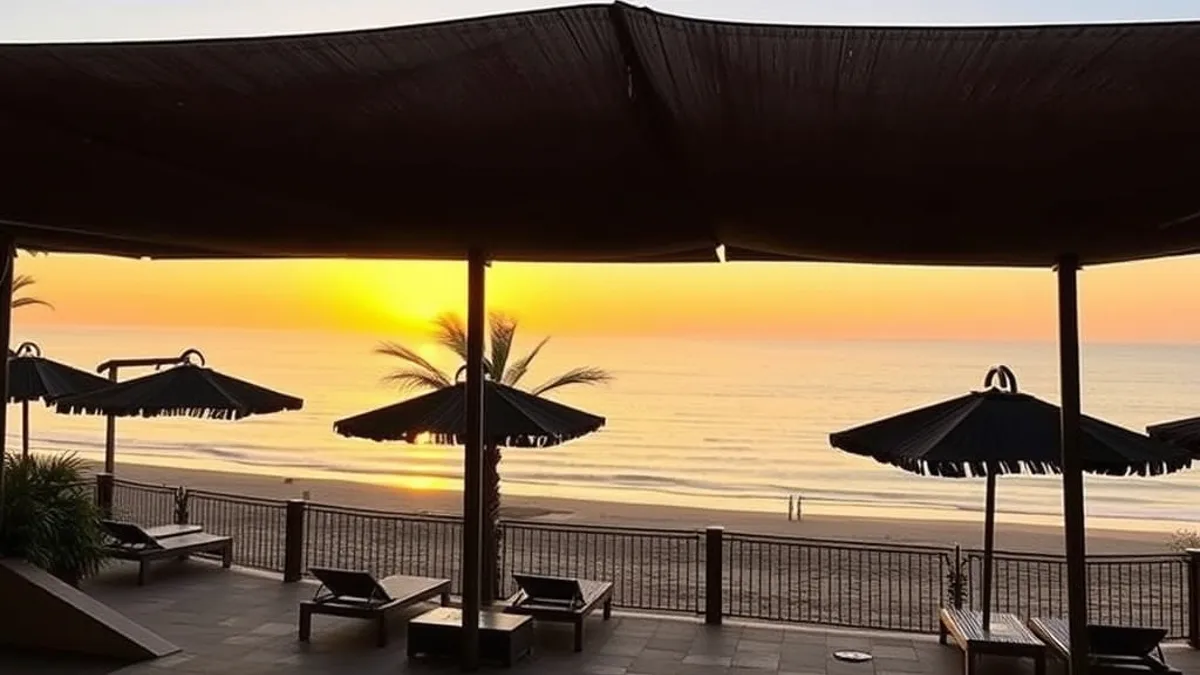
Dry-Land Activities That Justify the Stay
The strongest resorts for non-swimmers are the ones where water is an option, not the whole point. If the pool turns out to be deeper than promised or the beach is a disappointment, a good dry-land program means your holiday still works. Prioritize properties with spas and treatment rooms, yoga pavilions, cooking classes and guided walks — these fill your days without ever asking you to get past waist depth. When you compare resorts, read the daily activities schedule rather than the brochure photos. A property that lists two or three organized options each day, from cocktail-making sessions to nature walks, is far more reliable for a non-swimmer than one that simply points at its pool and hopes for the best.
Traveling with children raises the stakes. A kids’ club that runs a daily activity program keeps non-swimming children engaged away from deep water, rather than parked at the pool edge because there’s nothing else to do. Resorts generally accept ages 4-12 in these clubs, so check your child fits the range before booking. Ask what a typical day involves — craft sessions, treasure hunts and sports on grass are far better signs than vague promises of “supervised fun”. Also confirm whether the club runs all day or only in short morning and afternoon blocks, since gaps in coverage can leave you improvising with an energetic child.
Beyond the scheduled activities, look at the spaces designed for doing nothing in particular. These are the honest markers of a resort that functions without swimming:
- Shaded terraces and lounges. Comfortable, covered outdoor seating means you can spend hours near the water reading or chatting without baking in direct sun at the poolside.
- Games rooms and libraries. Table tennis, board games, billiards and a stocked bookshelf give you genuine alternatives on a hot afternoon, especially when the midday sun makes even shallow water unappealing.
- Evening entertainment. Live music, film nights, themed dinners or cultural shows extend the resort’s usable day well past sunset — a resort that goes quiet at 19:00 gives non-swimmers far less value for their stay.
Matching the Destination to Your Comfort Level
Before you compare pool photos or beach descriptions, think honestly about how confident you are around water. A traveler who paddles happily at knee depth has very different needs from someone who tenses up the moment the water reaches their thighs. Matching the destination type to that comfort level saves a lot of disappointment later.
Calm coves and lagoons for nervous waders
If the sea itself makes you uneasy, skip resorts on open, surf-exposed coasts. Waves, currents and shifting sand underfoot make even shallow water feel unpredictable. Sheltered lagoon-style destinations and calm-cove bays behave far more gently: the water typically stays flat, the shore entry is gradual, and you can wade out slowly while still standing. These settings let nervous waders enjoy the sea without ever feeling out of their depth.
Mountain and wellness resorts: water without the sea
Another option removes ocean skills from the equation entirely. Mountain and wellness resorts with thermal pools, heated indoor pools and hydrotherapy areas offer genuine water time in a controlled, warm, waist-deep setting. Soaking in a thermal basin at altitude requires no swimming ability at all, and the surrounding scenery does the rest of the work. For a closer look at this style of stay, see Everwave resorts in Switzerland for mountain wellness and fresh-air restoration.
Finally, don’t overlook city-edge resorts with large pool decks. If what you really want is water ambience — lounging beside a generous pool, ordering a drink at the swim-up bar, dipping a foot in — a big urban or suburban resort with an expansive deck delivers that without demanding any swimming. You get the resort feeling, easy access to city sights, and a pool you can stand in comfortably.
Questions to Ask Before Booking a Resort for Non-Swimmers
Marketing photos rarely tell you whether a pool truly works for a non-swimmer, so the booking stage is where you do the real checking. A short email or call to the resort, with specific questions, saves a disappointing arrival. Resorts used to hosting non-swimming guests answer these questions easily and without hedging, so treat hesitant or evasive replies as useful information in themselves. A property that cannot describe its own pool depths is probably one where you would spend the stay guessing. Work through the following steps before you confirm anything.
- Ask for exact pool depths. Request the maximum depth of each pool and, more importantly, whether a shallow zone of 0.9-1.2 m exists where an adult can stand with head and shoulders well above water. Vague answers like “shallow end available” are not enough; ask for figures.
- Get the lifeguard hours in writing. Confirm that lifeguard coverage runs roughly 8:00-18:00, and ask what supervision applies outside those times. Many pools become unsupervised in the evening, which matters if children will be near the water after dinner.
- Check how the pool is entered. Ask whether entry is zero-entry or beach-entry with a gradual slope, or whether it relies on steps into water that deepens quickly. Steps are workable for adults but harder for small children and anyone with limited mobility.
- Request photos of the beach entry. If the resort has a shore, ask for recent photos and a direct answer on whether the seabed shelves gently or drops off quickly. A shelving beach where you can walk 10-20 m before the water deepens is ideal; a steep drop is not.
It also helps to put the conversation in context when you make contact. Mention that your group includes non-swimmers or young children, and ask how the resort typically accommodates them. Some properties will volunteer extra details, such as which pool is quietest, where the shallowest entry sits, or which rooms are closest to the water. Those unprompted answers tell you a lot about how the resort thinks about guest safety. Finally, keep a record of the replies you receive, ideally in writing, so you have something to refer back to if the reality on arrival differs from what was promised.
When to Book and What to Pay
Timing your booking well can save a surprising amount on a resort stay, and it matters more for non-swimmers than for most travelers. Family rooms, connecting rooms and poolside positions sell first, so waiting until the last minute often means the very room types that suit non-swimmers are gone.
Booking for high season
For high season, book 2-4 months ahead. That applies to the tropics in December-April and to the Mediterranean in June-August, when demand peaks and family-oriented resorts fill their shallow-pool and kids’-club inventory earliest. Booking inside that window gives you real choice over room location and pool access rather than whatever is left.
The shoulder-season advantage
Shoulder-season stays cost 30-60% less than peak dates, and in most resort regions the weather is still warm enough for pool time and paddling. Peak season (December-April in the tropics, June-August in the Mediterranean) raises rates 30-60% over shoulder months, so shifting your trip by a few weeks can fund an upgrade or a longer stay. For shoulder-season trips, booking 3-6 weeks ahead is typically enough.
On price, expect roughly $150-400 per night for two at all-inclusive resorts that genuinely cater to non-swimmers in shoulder season. Properties with extensive shallow pools, lifeguarded hours and strong dry-land programming tend to sit toward the upper part of that range, while simpler beachside stays sit lower. Treat these as planning figures and check current rates with the resort or your booking platform, since prices move with demand and specific dates.
Wrapping Up Your Non-Swimmer Resort Choice
Choosing a resort when you can’t swim doesn’t mean settling for a deck chair and a good book. The right property combines gradual-entry water, verified shallow depths and lifeguarded hours, so you can stand comfortably in the pool or wade from the shore without ever feeling out of your depth. The key is to treat marketing words as noise and check the practical details instead.
Just as important is everything beyond the water. Dry-land programming like spas, cooking classes and kids’ clubs, plus the right destination type — calm coves, thermal resorts or city-edge pool decks — matters as much as the pool itself. And timing helps: booking 2-4 months ahead for peak season locks in the best family-friendly options at fairer rates. If this guide helped you plan a trip where non-swimmers relax just as much as swimmers, leave a comment or share it with a fellow traveler.