You’ve seen the photos: a glass dome on a green hillside, peaks glowing at sunset, coffee steaming on a wooden deck. The problem is figuring out where in Bulgaria that experience actually exists, and which months deliver it without cold, wet disappointment. Glamping in Bulgaria is growing fast, but information is scattered and the mountains are very different from each other.
This guide breaks the country down into its three core mountain regions — Rila, Pirin and the Rhodopes — and explains what each one does best, from high-altitude hiking bases to slow, quiet hill villages. We also walk through the season month by month, show you how to tell a genuinely comfortable site from a tent in a field, and help you plan your days around each region. By the end, you’ll know exactly where to book and when.
Why Glamping in Bulgaria Works for Mountain Travelers
Bulgaria’s mountains deliver genuine alpine scenery — jagged peaks, glacial lakes, pine forests — at prices well below what you’d pay in the Alps or other Western European glamping hubs. A quality tent or dome that might cost twice as much in France or Switzerland typically runs between about 60 and 150 euros per night here, and the landscapes are arguably just as dramatic.
Three ranges, three different moods
The country’s glamping scene centers on three ranges: Rila, Pirin and the Rhodopes. Rila is the high, rocky one, home to the country’s tallest summits and its famous glacial lakes. Pirin pairs sharp granite peaks with a polished resort infrastructure around Bansko. The Rhodopes are softer and greener, all rolling hills, deep gorges and quiet villages.
All three sit within a few hours of Sofia, which makes multi-region trips realistic even on a long weekend. You can base yourself in the capital, rent a car, and sample two very different mountain experiences without marathon drives.
More than just a tent in a field
The accommodation mix has matured, too. Traditional mountain hotels and family-run guesthouses are now joined by canvas tents, geodesic domes and timber cabins, many with proper beds, heating and en-suite or nearby bathrooms. That variety means you can match your stay style to your trip — a romantic dome for two, a sturdy cabin for a hiking group, or something in between.
Rila and Pirin: High Peaks and Lakeside Domes
Rila is Bulgaria’s high-drama range, and it works beautifully as a glamping base. The Seven Rila Lakes area draws hikers to a chain of glacial lakes terraced into the mountainside, while the Rila Monastery valley combines forest trails with one of the country’s most iconic cultural sites. Both areas sit roughly 2 hours from Sofia by car, which makes them easy to reach even on a Friday evening flight.
Pirin: peaks plus resort comfort
Pirin, centered on Bansko and nearby Razlog, offers a different balance. The mountains here are just as serious, but the surrounding towns come with a developed resort infrastructure: restaurants, thermal spa facilities, rental shops and reliable services year-round. Glamping sites in this area plug directly into that comfort, so you can sleep in a dome and still eat well and soak in a spa the same evening.
This region suits travelers who want to hike at elevations above 1,500 m but don’t want to rough it. Ridge walks and summit trails start close to town, lifts and marked routes are well established around Bansko, and food and logistics are never a problem.
Who this region suits
Choose Rila or Pirin if reliable access to food, spas and trailheads matters to you as much as the scenery. One practical note: at these elevations, night temperatures can drop below 10°C even in summer, so pick a site with real heating and check what’s included before you book.
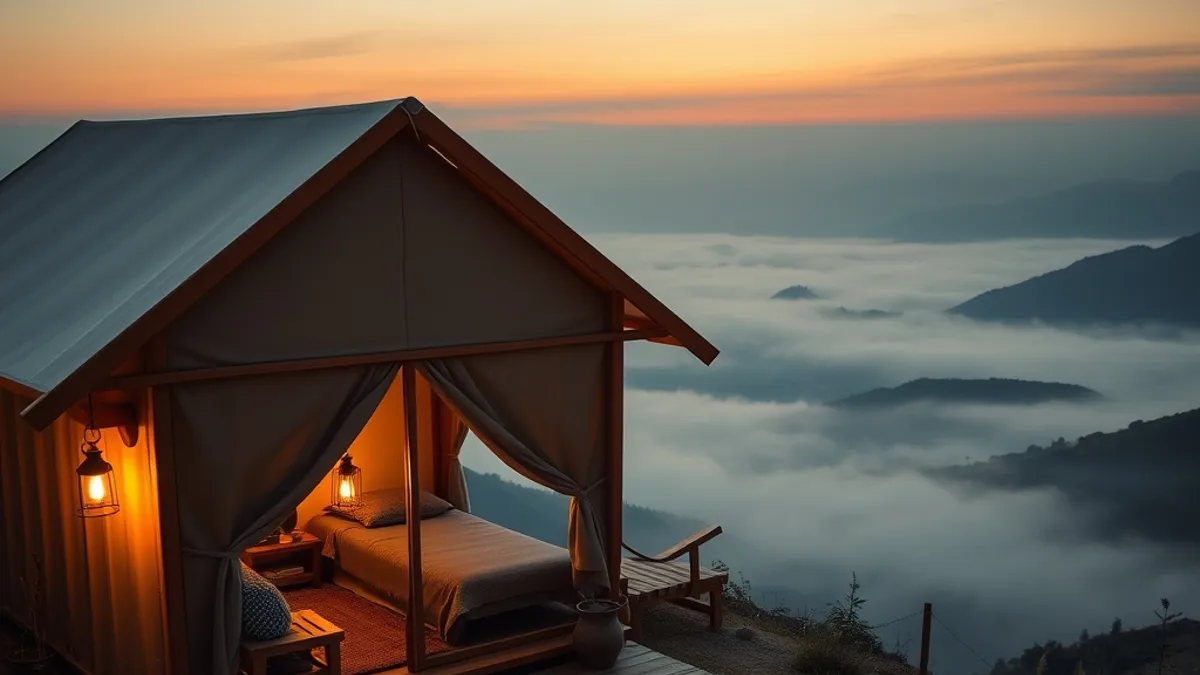
The Rhodopes: Quiet Hills and Slow Stays
The Rhodopes feel like a different country from the high peaks of Rila and Pirin. The terrain is softer and greener — rolling hills, meadows, deep river valleys — and the pace slows accordingly. Villages like Shiroka Laka, with its stone houses and folk music traditions, and the dramatic Trigrad gorge area make natural anchors for a stay here.
What glamping looks like here
Because there are fewer large resorts in the Rhodopes, glamping sites lean on what the region does best: stargazing, local food and silence. Expect home-cooked meals built around regional recipes, dark skies with almost no light pollution, and evenings that revolve around a fire rather than a resort program. If you enjoy slow mornings like the ones you’d find in quiet countryside hideaways where lavender fields set the rhythm of the day, the Rhodopes deliver a similar feeling with a Balkan accent.
Who should choose the Rhodopes
This is a region for couples who want a romantic, low-key escape and for remote workers who need calm, a good view and a table to work from — not for travelers chasing high-altitude summit hikes. The walking here is gentler: gorge trails, village-to-village paths and scenic drives between monasteries and viewpoints. If your ideal mountain day ends with local cheese, a glass of something local and an early night under a very dark sky, this is your range.
Season by Season: When to Book Your Stay
Bulgaria’s mountain glamping season runs roughly from May to October, but the experience changes noticeably from month to month. Timing your trip well can mean the difference between a quiet dome under blooming hillsides and fighting for a booking at peak rates.
May and June are the sweet spot for green landscapes. Meadows are fresh, rhododendrons and wildflowers cover the hillsides, and rates sit at the lower end of the typical 60-150 euro range. The air is crisp, trails are quiet, and you get the best value of the year.
July and August bring the warmest nights and the fullest sites. This is when families, hikers and festival-goers all converge on the mountains, and the most popular domes and tents fill up fast. If you want a summer stay, book 2-3 months ahead — especially for weekends.
September and October are underrated. Autumn color spreads across the slopes, crowds thin out, and a few weeks’ notice is often enough to secure a good site. Early autumn still offers warm days, while October nights turn properly cold — pack accordingly.
From November to April, most mountain glamping sites close entirely or switch to heated cabins only. Always verify the exact operating mode with the site before booking a winter trip.
- Midweek stays in July and August are noticeably easier to book than weekends, when local families and regional travelers compete for the same domes.
- June can still bring afternoon thunderstorms, so check whether your site offers covered lounging areas or indoor common space before committing to an early-summer date.
- October stays often come with wood stoves or electric heaters included, but confirm what is provided — some sites charge extra for firewood in late season.
- May openings can be staggered: a few higher-altitude sites open later than others, so confirm your chosen site’s first operating week rather than assuming a May 1 start.
How to Spot a Quality Mountain Glamping Site
Glamping in the Bulgarian mountains ranges from genuinely well-built domes to little more than a tent pitched in a field. A few checks before you book will save you from a cold, damp disappointment.
Start with insulation and heating. Even in midsummer, nights at high elevation can turn surprisingly chilly, and a thin canvas tent with no heater makes for a miserable evening. Ask specifically what kind of heating is installed and whether it runs all night, not just a few hours at bedtime.
Next, look closely at the bathroom situation. A quality site either offers en-suite bathrooms in each unit or has clean shared facilities within a short walk. “Shared” should not mean a long trek down a dark path in the rain.
Mountain weather shifts quickly, so covered outdoor space matters more than it would at a seaside site. A veranda, canopy or covered lounge lets you enjoy the view during a passing shower instead of hiding inside with your boots on.
Finally, read recent reviews with road access in mind. Many mountain sites sit on unpaved tracks, and what looks like a short drive on the map can feel very different after rain, especially in a low-clearance rental car.
- Ask about hot water capacity: at smaller sites, showers can run lukewarm when several units fill up at once in peak months.
- Check whether windows and vents have insect screens, since mountain evenings in June and July can bring mosquitoes near lakes and streams.
- Look for blackout options — lightweight dome fabric lets in early sunrise light, which matters if you are a light sleeper.
- Confirm luggage logistics: some sites on tracks require a short walk from the parking area, so ask if they help carry bags or provide a cart.
Planning Your Days Around the Sites
The best glamping trips in Bulgaria are built around a sensible daily rhythm. Each of the three core regions rewards a different style of planning, so think about what your days should look like before you choose a base.
High-peak days in Rila and Pirin
If you base yourself in Rila or Pirin, plan your days around day hikes to the Seven Rila Lakes area or ridgelines above 1,500 m. Start early, since afternoon clouds build quickly at altitude, and keep one flexible day in reserve. When the weather turns, fall back on the region’s spa towns — Bansko and the Razlog valley offer pools, thermal baths and plenty of good food, making them an ideal rainy-day fallback that keeps the trip enjoyable even when the trails are off-limits.
Slow days in the Rhodopes
In the Rhodopes, resist the urge to plan summit hikes. This region works best at a slower pace: build your days around villages like Shiroka Laka, monastery visits, scenic drives through the Trigrad gorge area and long lunches featuring local food. Treat the drive itself as the activity — the roads wind through some of the greenest, quietest terrain in the country, and stopping at viewpoints and small village cafes is where the region reveals its charm.
Whichever region you choose, rent a car. Most quality glamping sites sit 30-60 minutes from the nearest train or bus hub, and mountain tracks rarely have regular public transport. A car gives you the freedom to reach trailheads, swap plans when weather shifts and stock up on supplies in the nearest town without relying on taxi prices for every trip.
Your Bulgaria Glamping Trip at a Glance
If you want a mountain escape that feels a little luxurious without the Alpine price tag, Bulgaria delivers. The key is matching the region to your style: Rila and Pirin suit travelers chasing high-peak hiking and lakeside domes, while the Rhodopes reward those who prefer quiet hills, villages and slow mornings over summit days.
Timing matters just as much. The season window runs roughly May to October, with July and August as the busy peak — book those stays 2-3 months ahead. Expect around 60 to 150 euros per night for a quality tent or dome, and pack warm layers, since nights stay chilly in the mountains no matter the month. If this guide helped you plan your trip, leave a comment or share it with a fellow traveler.