Glamping with a dog sounds simple: book a tent, pack the leash, go. But once you start looking at listings, the questions pile up. Which sites actually allow dogs, what fees and restrictions will you face at check-in, and what gear keeps a dog comfortable on cold nights in a canvas tent? Many travelers only discover the answers after paying a deposit.
This guide walks you through the decisions that matter most. We explain the pet rules glamping sites typically set, how to vet a property before you book, and what belongs on a realistic packing list. You’ll also get an arrival-day checklist for setting up a safe pitch, tips for keeping your dog calm outdoors, and advice on choosing destinations and seasons that suit a four-legged travel companion. Follow the steps in order and you’ll avoid the most common mistakes, from surprise pet fees to sleepless nights on freezing ground.
What Pet Rules Glamping Sites Actually Set
Most pet-friendly glamping sites are upfront about their rules, but they vary more than first-time travelers expect. The most consistent pattern is the pet fee: many properties charge roughly $25–$75 per stay, per dog, and add it on top of the nightly rate. Many sites also cap pets at 1–2 dogs per tent or cabin, so a family with three dogs may need to book two units or look elsewhere. Both the fee and the cap are usually stated in the listing, but if you can’t find them, email the host before booking rather than assuming.
The restrictions that catch people out
Standard rules typically include keeping dogs on a leash in shared areas, no dogs on beds or furniture, and no pets left alone in the tent. That last one matters more than it sounds: a dog left in a canvas unit can chew through the fabric in minutes, and you’ll be liable for the damage. Some sites also set breed or weight limits, so owners of large breeds should confirm this early in the conversation.
Vaccination paperwork is the other common hurdle. Many sites ask for proof at check-in, and a current rabies vaccination is the document most frequently requested. Ask the host exactly what they need to see before you book, and bring a printed copy rather than relying on your phone in an area with weak signal.
How to Vet a Site Before You Book
A site can advertise itself as pet-friendly and still be a poor fit for your dog. The property may allow dogs in general while reserving only certain tents or cabins for them, or the pitch may sit beside a busy road with no fenced area at all. Photos rarely show these details, and a listing description can gloss over them entirely. The only reliable way to know is to ask the host specific questions before you pay a deposit. Work through the steps below, and keep the answers in writing if you can, so there’s no confusion when you arrive.
- Confirm the specific unit, not just the property. Ask the host directly whether the exact tent or cabin you want accepts dogs. Some sites keep only a handful of units pet-friendly, and booking the wrong one can mean losing your reservation at check-in. Get the confirmation in the booking message rather than over the phone.
- Ask about fencing and escape routes. A fully or partially fenced pitch lets your dog relax off-leash in your own space. If there’s no fence, ask how close the nearest road or water is and whether you’ll need to tether the dog for the whole stay. Some dogs settle fine on a long-line; others become stressed and vocal, which causes problems with neighbors.
- Check for walking trails from the site. Dogs need several walks a day, so look for properties with trails that start at the tent rather than a drive away. Hosts can usually describe their best dog-friendly routes, including whether livestock graze along the way, which matters if your dog doesn’t cope well with sheep or cattle.
- Confirm water and shade at the pitch. Ask whether there’s a water source nearby or whether you need to haul your own, and whether the tent sits in afternoon shade. A canvas tent in full sun heats up fast, and a dog that has spent the morning walking needs a cool, shaded spot to recover.
- Book early for summer. For June–August stays, book pet-friendly units 2–3 months ahead, since dog-friendly units are fewer and sell out first. If your dates are flexible, aim for May or September–October instead. Shoulder-season availability is much easier to secure, and the milder temperatures are noticeably kinder to dogs that spend long days outdoors.
Packing List for Glamping With a Dog
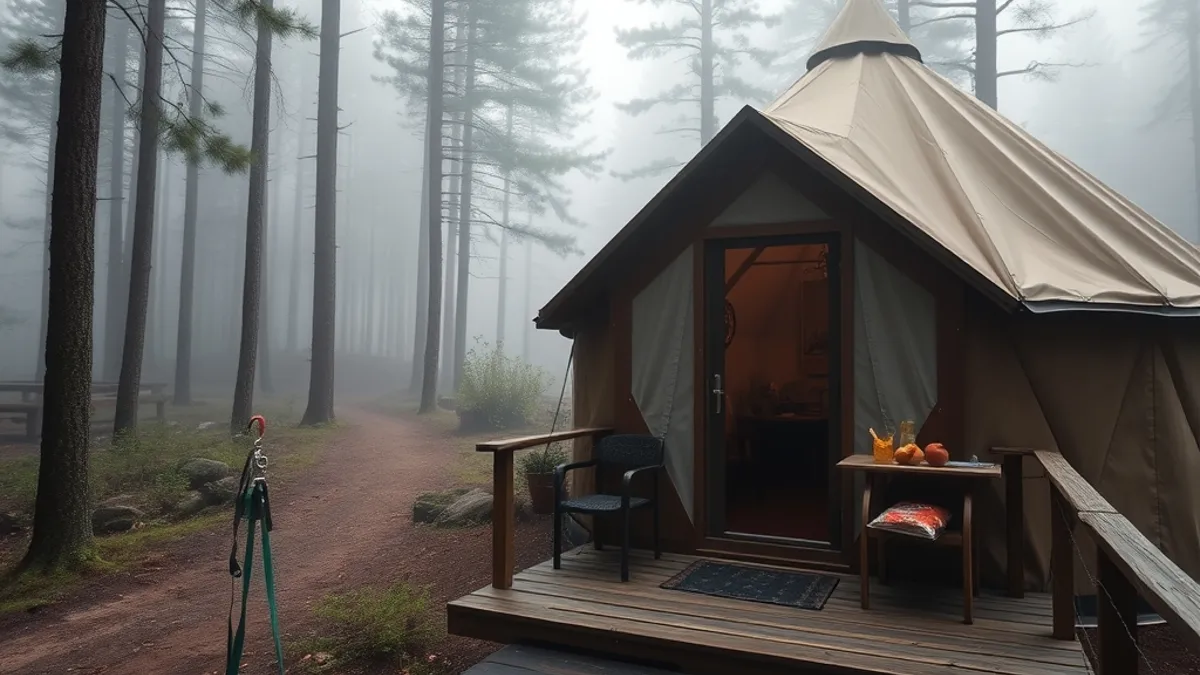
Glamping means you don’t need to haul a full camping kitchen, but a dog adds its own category of gear that regular packing lists skip. The essentials fall into three groups: daily basics, comfort for cold nights, and cleanup and health items. Pack as if the nearest pet shop is an hour away, because at many rural sites, it is. A little extra weight in the car is a fair trade for not improvising with a shoelace when a leash clip breaks on the first morning.
Start with the basics: a 6-foot (1.8 m) leash, a harness with an ID tag, and collapsible food and water bowls. Bring your dog’s usual food rather than buying on the road, since a sudden switch on an active trip invites stomach trouble. Water is the item people most often underestimate. Plan on 1 liter of water per 10 kg (22 lb) of dog per day for active days outdoors, and carry more than you think you need, since a dog that’s been hiking all afternoon will drink far more than at home. A large, refillable container for the car makes topping up bowls at the pitch much easier.
- A dog bed or insulated mat. Ground temperatures drop fast, and nights can fall below 10°C (50°F) even in summer at forest or mountain sites. A thin travel mat with an insulating base keeps your dog off the cold canvas floor.
- A long-line or tether. Useful when a 6-foot leash is impractical at the tent, letting your dog move around the pitch while staying secure.
- Waste bags in generous quantity. Bring far more than the number of days suggests; shared paths and trails mean pickups several times a day.
- A dedicated paw towel. Forest and lakeside sites get muddy, and one old towel by the tent entrance saves the interior of your unit and your dog’s bedding.
- A tick remover tool. Forest and grassland sites carry tick risk, and a proper remover is far safer than trying to pull one off with fingers.
- Printed vaccination records. Check-in may require proof, and rural sites often have no signal for showing documents on a phone.
Site Checklist for Arrival Day
The first hour at a glamping site sets the tone for the whole stay, so treat arrival day as a mini inspection before you relax. A few minutes of checking and setup can prevent the most common problems: a dog slipping through a gap in the fence, stepping on something sharp left by previous guests, or overheating while you unload the car. Resist the temptation to open the car door straight away, even if your dog is whining. Work through the steps below in order, and only bring your dog onto the pitch once you have walked it yourself. If you are traveling with someone else, one person can hold the dog on the leash nearby while the other inspects.
- Walk the pitch without your dog first. Look for gaps in or under fencing, broken wire, discarded bottle caps, and sharp sticks. Note where the fire pit sits and whether embers or hot stones could still be a hazard, especially if the previous guests checked out that morning. Trace possible escape routes toward roads, streams, or neighboring pitches so you know where a spooked dog would likely run.
- Set up a shaded rest zone before anything else. Place the dog bed or mat in the shadiest spot, clip on a long-line or tether if you plan to use one, and put down a full bowl of water. This gives your dog a calm, defined home base while you unload the car and set up the rest of camp.
- Do a quick safety sweep of the tent or cabin interior. Check for zippers that do not close fully, gaps at the base of canvas walls, and anything your dog could chew or knock over. Decide now where the dog bed goes inside so there is no debate later.
- Locate the nearest vet clinic and save its address. Rural glamping sites can be 30–60 minutes from emergency care, so you want the route saved in your phone before you need it. Ask the host if they keep a recommended clinic on file, and note the opening hours if they are listed.
- Introduce your dog to the space calmly. Bring your dog in on the 6-foot leash, let it sniff the pitch and rest zone, and reward settling down on the bed. A calm first walk-through makes the rest of the stay noticeably easier.
Once these steps are done, you can unpack your own things and settle in properly. Put the kettle on, plan the first short walk, and let your dog watch the site from its new base. The small time investment at arrival usually pays for itself many times over in a quieter, safer stay.
Keeping Your Dog Safe and Calm Outdoors
Once camp is set up, the goal shifts from setup to routine. Dogs settle fastest when the day feels familiar, so the more of your home rhythm you can carry into the trip, the calmer your dog will be. That applies to food, walks, and where your dog sleeps at night.
Daily checks and routines
Check paws and coat for ticks every evening, especially at forest and grassland sites from May through October. Run your hands slowly along the legs, chest, ears, and between the toes, and use a tick remover rather than fingers if you find one. A quick paw check also catches thorns, burrs, or small cuts before they become a problem on the next day’s walk.
Keep meals and walks on the same schedule you follow at home. Feed at the usual times, walk in the usual order of morning and evening, and bring the same food you use at home so you are not changing diet and environment at once. Dogs that know what happens next are far less likely to pace, bark, or wander off at night.
Managing space at the tent
A 6-foot leash is often required in shared areas, but it can be impractical right at the tent. In that case, use a long-line or a secure tether attached to a fixed point, always with water and shade within reach, and only while you are present. Never leave your dog unattended in a canvas unit: canvas heats up quickly in sun, dogs can push through zippers, and a left-alone dog may bark and disturb other guests. If you need to leave the site for a trip to a shop, take your dog with you or arrange it with the host in advance.
Finish each evening with a short wind-down: paw check, fresh water, and the dog bed in its usual spot. A predictable end to the day helps your dog sleep, which means you sleep too.
Best Destinations and Seasons for Glamping With a Dog
Not all glamping sites are equally dog-friendly, and the difference usually comes down to terrain and temperature. The best trips give your dog space to explore straight from the tent and keep ground and air temperatures comfortable for a full day of activity. Choosing the right landscape and season does more for your dog’s comfort than any piece of gear.
Where dogs thrive
Forest and lakeside sites suit dogs best. Trails usually start right at the pitch, the ground stays soft on paws, and shade is plentiful through the middle of the day. For a sense of what works well, read about forest hideaways in Latvia’s Gauja region, where quiet woodland and green stillness make an ideal base for daily walks. Irish Atlantic hideouts offer a similar setup, with coastal and cliff paths reachable directly from your accommodation.
Coastal sites also work well, but time them for the shoulder season. In May or in September and October, the sand is less crowded, other beachgoers are fewer, and temperatures stay comfortable for long walks. In peak summer, hot sand and busy beaches can make a coastal trip stressful rather than relaxing.
Timing your trip
Avoid peak July and August heat at southern destinations, where midday ground temperatures can be hard on paws and shade is limited at many pitches. May and September through October give you cooler ground, quieter trails, and a calmer atmosphere for a dog that is new to glamping. Availability is generally easier in these months too, which makes it simpler to find a genuinely pet-friendly unit rather than settling for whatever is left.
Match the destination to your dog’s habits as well as the season. A high-energy dog will love long forest trails; an older dog may prefer a lakeside pitch with gentle, short loops. When landscape, season, and your dog’s temperament line up, glamping becomes an easy trip for everyone.
The Takeaway
Glamping with a dog comes down to three things: confirming pet rules and fees before booking, packing for cold nights and daily water needs, and running an arrival checklist. If you know the pet fee, the dog limit per unit, and whether your specific tent accepts pets, most booking surprises disappear before they happen.
The gear matters just as much. A 6-foot leash, enough water for each active day, and a bed that insulates against chilly nights cover the basics, while waste bags and vaccination records keep you ready for check-in and daily cleanup. When it comes to timing, shoulder-season trips in May or September–October make the whole experience easier for both dog and owner, with milder temperatures and quieter trails. If you have glamped with your dog before, share what worked for you in the comments below.