Transylvania has the ingredients travelers dream about: medieval Saxon villages, forested Carpathian slopes with brown bears, and wide mountain meadows. But when it comes to glamping in Transylvania, many people hit a wall. Which area makes the best base? How do you time a trip around a short season and roads that close part of the year? The region is bigger than it looks on the map, and the difference between a hillside dome near Brașov and a quiet farm stay in the Târnava valley is significant.
This guide breaks the planning down step by step. We compare the best areas for glamping in Transylvania, explain when to go and how far ahead to book, and help you choose between safari tents, domes and cabins. You’ll also find itinerary advice built around Brașov and Sibiu, plus practical details on budgets, packing and local etiquette. By the end, you should be able to pick an area, a season and a stay type with confidence.
Why Glamping in Transylvania Works for Slow Travelers
Transylvania rewards travelers who move slowly, and glamping fits that rhythm better than almost any other style of stay. Within short drives you can wander a medieval Saxon village in the morning, walk a meadow trail in the afternoon, and sit quietly at the edge of bear-watching forest in the evening. Instead of racing between hotels, you unpack once and let the landscape set the pace.
Small sites, rural settings
Glamping here has stayed genuinely rural. Most sites are small, often just 5–15 units, set on farmland or at forest edges rather than in resort zones. That means quiet nights, direct contact with hosts, and views of hay meadows or ridgelines from your tent or deck. Many properties are family-run farms that added safari tents or domes to their existing land, so breakfast often comes from the garden next door.
The other big draw is value. Prices run noticeably lower than comparable stays in Western Europe, with quality tents and domes typically ranging from about €80 to €200 per night. For that rate you usually get far more space and privacy than a hotel room would offer, plus a setting no city hotel can match.
For slow travelers, the combination is hard to beat: compact distances, small-scale stays and everyday village life all around you. You don’t need a packed schedule; the region works when you give it time.
Best Areas for Glamping in Transylvania
Transylvania is large and varied, and the right glamping base depends on what you want from your trip. Castles and marked trails cluster around Brașov, while airport access and dramatic drives center on Sibiu. Further afield, the Târnava valley and the Apuseni Mountains offer quieter, wilder versions of the region, often with fewer visitors and more space between sites. Here’s how the main areas compare, so you can match your base to your priorities before you book anything.
- Brașov–Bran area: the most developed glamping zone, with the widest choice of sites and stay types. Piatra Craiului National Park’s trailheads sit close by, so you can combine a castle day with a full mountain walk without changing bases. Bran Castle sits roughly 30 km from Brașov, making easy half-day trips realistic.
- Sibiu and the Cibin valley: the practical pick if you want to fly in and start driving quickly. Sibiu has its own airport, and the area works as a staging point for the Transfăgărășan road in summer, when the pass is usually open.
- Mălâncrav and the Târnava valley: the quietest option, with fortified churches, orchards and vineyard-covered hills. Sites here are often part of working farms, and village life continues around you at an unhurried pace. Sighișoara is about 90 km from Brașov, so a valley base pairs well with a Brașov stay.
- Apuseni Mountains in the west: a cooler, cave-rich alternative. The karst landscape brings gorges, underground rivers and ice caves, and nights stay refreshingly cool when lowland Transylvania swelters in July and August.
If icons and trails top your list, start with Brașov–Bran. If access and a famous scenic drive matter most, base yourself near Sibiu. For stillness and rural character, the Târnava villages are hard to match, and the Apuseni suit travelers who’ve already seen the region’s highlights or want a cooler summer escape. Whichever area you choose, remember that rural sites are rarely reachable by public transport, so factor a rental car into your plan from the start.
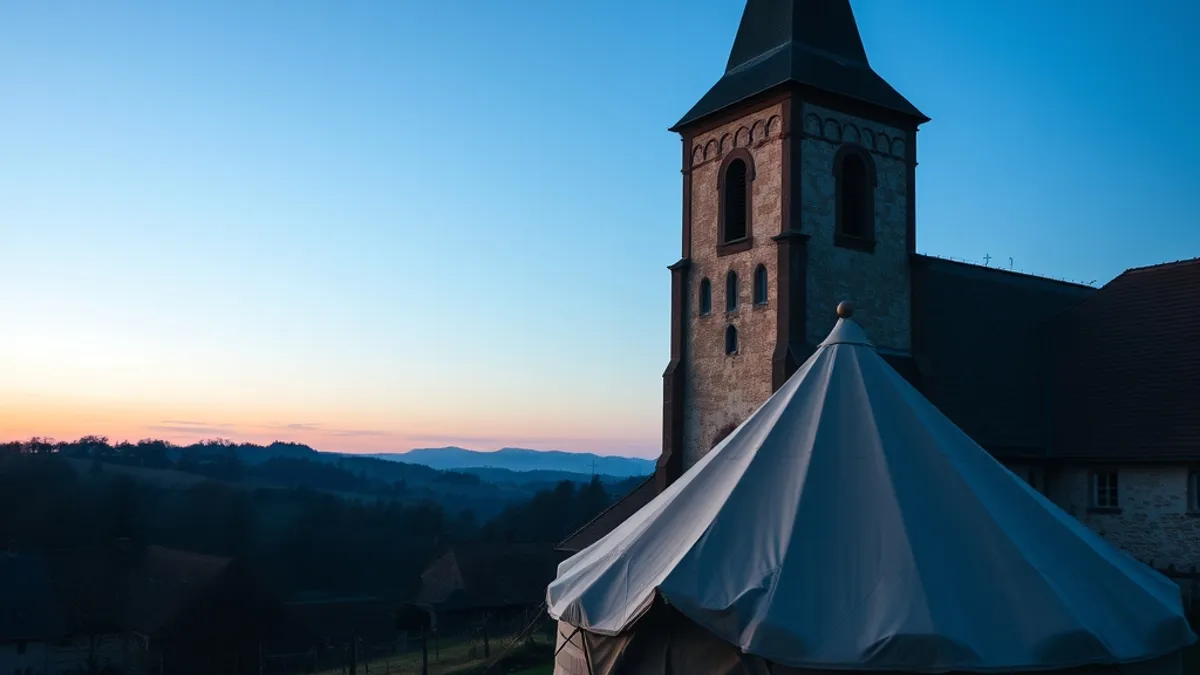
When to Go: Seasons and Booking Windows
Timing makes a real difference in Transylvania, both for comfort and for availability. The main glamping season runs roughly May to September, but the months within it behave very differently.
The shoulder sweet spot
May–June and September are the standout months. Days typically sit between 15–25°C, landscapes stay green, and visitor numbers drop well below summer levels. Sites that sell out in August often have midweek availability in these months, and hosts have more time to talk about the area, arrange meals or point you toward quiet trails. If your dates are flexible, aim here first.
Peak summer and booking windows
July and August bring the warmest weather and the fullest calendars. Summer weekends, especially, require booking 2–4 months ahead, and for August you should plan 6+ months in advance if you want first pick of domes or tents with views. Late bookers in peak season usually face leftover units in less desirable spots.
One road matters for seasonal planning: the Transfăgărășan (DN7C), Transylvania’s most famous scenic drive, is usually open only from June to late October, weather permitting. If driving it is a priority, plan your trip inside that window rather than assuming it will be open whenever you visit. A September trip can combine the road with shoulder-season calm, which is why that month works so well for many travelers.
How to Choose Between Tents, Domes and Cabins
Transylvania’s glamping sites come in a few distinct styles, and picking the right one matters more here than in many destinations. The difference is not just about looks. A safari tent in a meadow and a cabin on a forested hillside behave very differently once the evening wind picks up on the ridge, and mountain nights stay cool even after warm afternoons.
The main accommodation types each have a natural home in the region, so it helps to match the style to the area and the season you are planning.
- Safari tents work best on meadow sites near Bran and the Piatra Craiului range, where the whole point is waking up to open views of the ridge line. Choose one with a solid wooden platform and a covered veranda, since morning dew is common on grazing land.
- Geodesic domes handle wind and rain better than canvas, which makes them a safe bet on exposed hillside locations. Many are positioned with a clear sky view through the transparent panels, so ask whether blinds or curtains are included for privacy.
- Cabins and lodges are the most reliable choice in the Apuseni Mountains and for trips in early or late season, when insulated walls and a proper wood stove make the difference between a cozy evening and a cold one.
Before you confirm any shoulder-season booking, message the host about three things: heating, a private bathroom, and a covered terrace. Some safari tents in the region share bathroom blocks, which is fine in July but less pleasant in a May shower. A covered terrace also extends the usable space on drizzly days, and in Transylvania those days happen in every month.
Building Your Itinerary Around Brașov and Sibiu
Transylvania rewards slow planning. Distances on the map can be deceiving: what looks like a short hop often turns into a winding drive through hills and villages, so a two-base itinerary beats a frantic circuit of the whole region. Brașov and Sibiu make natural anchors because both sit close to glamping country and both are served by international airports. Most travelers arrive through one of these two gateways, and your choice shapes the rhythm of the entire trip.
- Choose your airport. Bucharest works well if you head straight for Brașov, which takes about 2.5 hours by car. Sibiu’s airport is the smarter entry if you want to start in the Cibin valley or drive the Transfăgărășan early in your trip.
- Rent a car on arrival. Rural glamping sites sit on farmland and forest edges, and they are rarely reachable by public transport, so a car is not optional here in practice.
- Give each base 3–4 nights. From a Brașov base, Bran Castle is roughly 30 km away and Sighișoara about 90 km, so day trips stay comfortable instead of becoming forced marches.
- Pair your bases deliberately. Combine one mountain or meadow base with one Saxon-village base, and you experience both the wild side of the region and its fortified-church countryside without ever packing up on consecutive mornings.
Resist the urge to add a third base unless your trip runs beyond a week. Romanian country roads, especially the scenic ones, take longer than the distance suggests, and the best evenings at a glamping site happen when you stay put long enough for the light to change. Build in unstructured time: a slow breakfast on the terrace, a wander to the nearest village, an unhurried drive back with a stop at a roadside farm stand. Those unplanned hours tend to become the memories you keep, and they are exactly what a two-base trip is designed to give you.
Practical Details: Budgets, Packing and Local Etiquette
Glamping in Transylvania is genuinely affordable compared with Western Europe, but a realistic budget should cover more than the nightly rate. Rates for quality tents and domes vary with the season, the level of comfort and how remote the site is, so ask each host for current pricing before you commit. The biggest variable after accommodation is your vehicle: add roughly €40–60 per day for a rental car and fuel, and the two fixed costs of your trip are nailed down.
Packing and etiquette matter more here than at a resort, because most sites are working farmland or sit at the edge of villages where people still keep animals and keep early hours. A few specifics are worth planning for:
- Pack layers and rain gear even in July. Mountain sites can see nights drop below 10°C in midsummer, so a fleece and warm socks earn their place in the bag, along with a waterproof jacket for afternoon showers.
- Ask about meals when you book. Many sites serve farm-to-table dinners using produce from the land around them, but options range from full board to self-catering, and the nearest restaurant may be a drive away.
- Keep a torch and cash handy. Paths between tents and bathrooms are often unlit by design for stargazing, and small village shops and farm stands rarely take cards.
- Respect quiet hours and livestock boundaries. Stay on marked paths around grazing animals, keep gates closed, and keep evening noise down near village-adjacent sites, where sound carries across the valley.
Treat the site as a guest on someone’s land rather than a hotel customer, and hosts tend to respond in kind, often with extra eggs, honey or advice on where to watch for bears from a safe distance. Budget a little flexibility for extras too — wood-fired hot tubs, breakfast baskets and airport transfers are common add-ons — and you’ll leave with a trip that feels far more expensive than it was.
Wrapping Up Your Transylvania Glamping Trip
Transylvania answers the classic dilemma: you want castles and Carpathian scenery without crowds or generic hotels. The fix is choosing your area first. Go Brașov–Bran for the icons, Sibiu for easy access and the Transfăgărășan, or the Târnava villages around Mălâncrav for quiet orchard country.
Timing matters as much as location. May–June and September give you green landscapes, 15–25°C days and fewer visitors, while July–August demands booking 2–4 months ahead — and even earlier for August. Match your stay type to the season, whether that means a safari tent in a meadow or a heated cabin in the Apuseni. If this helped you plan your trip, leave a comment or share the article.