Most travelers overpack for a lodge stay because camps rarely spell out what is already waiting in your tent. You end up stuffing a week’s worth of toiletries, spare towels and “just in case” clothes into a bag that was never going to fit the small plane taking you there. The result: heavy luggage fees, cramped cargo holds and clothes you never once wore.
Good lodge packing lists solve this by starting with what the camp provides and working backward. In this guide, we cover why you should confirm your camp’s inclusions before packing a single item, why soft duffels beat hard suitcases on light aircraft transfers, and how to layer clothing for the dry and wet seasons. We also look at the gear worth its weight, health and sun protection, what to leave behind entirely, and finish with a simple checklist you can run through the night before departure.
Why Lodge Packing Lists Start With Your Camp’s Provided Items
The single biggest packing mistake at safari lodges is bringing things that are already in your tent. Toiletries, towels, hairdryers and mosquito nets are standard inclusions at most camps, yet travelers routinely fill their duffels with travel-size shampoo and bug spray for the net they won’t need. Before you pack anything, email or call your camp and ask for their packing list. Most will send one, and it takes five minutes to avoid dragging duplicates across two countries.
Laundry changes the math even more. Most lodges offer daily laundry service with turnaround typically around 24 hours, which means three to four changes of clothing comfortably cover a week-long stay. Pack one outfit per day type rather than one per day: a couple of safari shirts, a warm layer and something comfortable for dinner will rotate endlessly while yesterday’s clothes get washed and returned to your shelf.
Ask about loaner gear before you buy
Camps often lend equipment that would eat half your luggage allowance. Many supply a shared pair of binoculars per vehicle, rain ponchos for wet drives, and beanbags for photographers to rest long lenses on the vehicle’s window ledge or roof. A quick question at booking can save you hundreds of dollars and several kilograms, so treat the pre-trip conversation with your camp as the real first step of packing.
Luggage Rules: Why Soft Duffels Beat Hard Suitcases
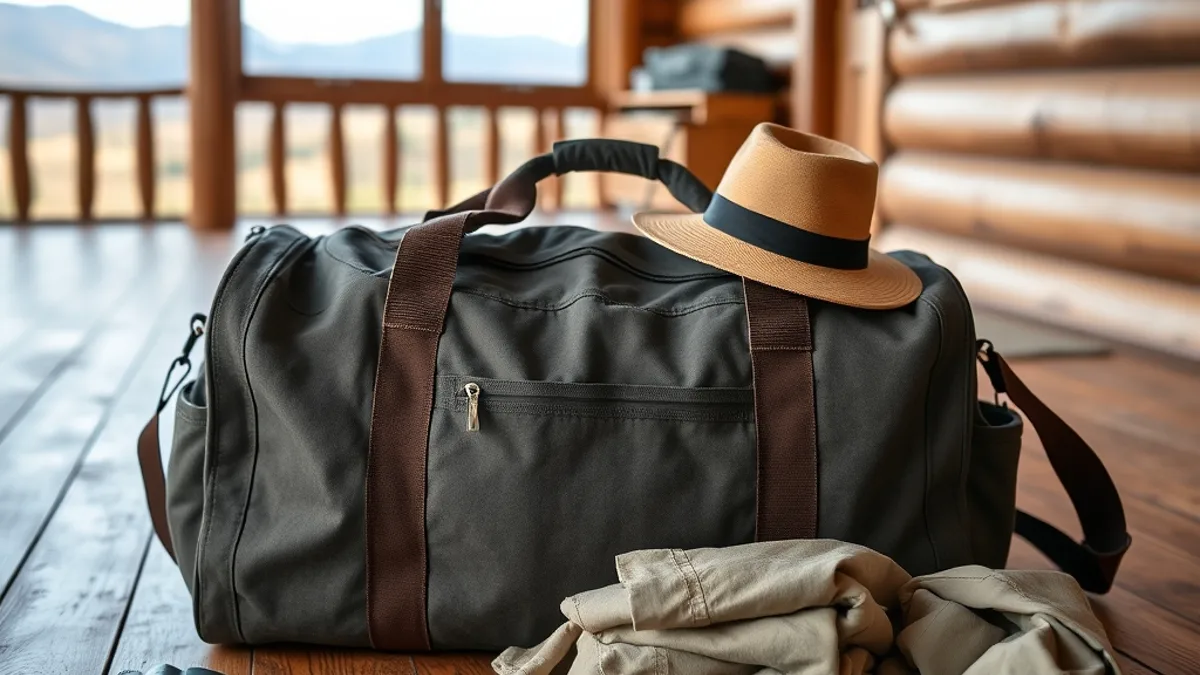
If your itinerary includes light aircraft transfers between camps, your luggage matters as much as what goes inside it. These small planes typically cap luggage at 15 kg per person, and they expect soft-sided bags without wheels. Hard suitcases often simply cannot fit the curved cargo holds of small Cessna aircraft, so duffels are strongly preferred, and some operators may refuse or repack rigid bags at the airstrip. Because allowances vary by route and aircraft type, always confirm the current weight limit and bag requirements with your operator or booking agent before you fly. A few kilograms over can mean leaving gear behind at the departure lounge or paying for a separate seat for excess camera equipment, so weigh your packed duffel at home first.
Camera gear complicates things. If you carry a telephoto lens and a second body, the combined weight can swallow most of your allowance, so plan to wear or hand-carry the heaviest items on board. A padded camera backpack that fits under the seat in front of you is usually accepted as a personal item, but confirm this with your operator ahead of time. Keep spare batteries, memory cards and lens cloths in that carry-on rather than in the hold, since duffels get tossed, stacked and sometimes rained on between the plane and your tent.
- Choose a duffel with backpack straps. You will often walk across dirt airstrips and up camp paths, and two free hands make transfers far easier than a single shoulder strap.
- Look for a bag around 60-80 liters. Anything larger invites overpacking, and the 15 kg limit will catch you long before the bag is full.
- Use packing cubes or dry bags inside. They compress clothing, keep dust out during open-vehicle drives, and let camp staff handle your bag without digging through it.
Clothing for Lodge Packing Lists: Layers by Season
What you wear on safari depends almost entirely on when you go, so plan your wardrobe around the seasons rather than a fixed list. During the dry season, which runs roughly from June to October, mornings on open game drives are often below 10°C. That sounds manageable until you are sitting in an open vehicle at 6 a.m. with cold wind pushing straight through a thin shirt. Pack a fleece jacket and a beanie, layered over a t-shirt, so you can shed pieces one at a time as the day warms up. By mid-morning you will usually be down to a single layer.
The wet season, from November to April, brings a different challenge: rain, humidity and laundry that may struggle to dry on a line, even where camps offer a service. Choose quick-dry fabrics over cotton, add a light rain shell, and keep electronics and documents in waterproof bags. Shoes with decent grip that handle mud are more useful here than anything breathable-and-pretty, and a spare pair of socks makes muddy afternoons far more bearable.
- Build your palette around khaki, olive and beige. Neutral tones blend into the landscape, hide dust remarkably well, and keep you comfortable when animals glance toward the vehicle.
- Skip dark blue entirely. It attracts tsetse flies, whose bites are painful and persistent, so a navy shirt can turn a simple game drive into an ordeal.
- Leave camouflage at home. It is restricted in some African countries and is best reserved for the military, not for guests on game drives.
- Pick long sleeves you can roll. Lightweight long-sleeved shirts double as sun protection at midday and mosquito cover after dark, without needing a separate layer for each.
Gear and Gadgets Worth the Space
Ask any seasoned safari traveler what they regret leaving at home, and binoculars top the list. Most safari camps supply a shared pair per vehicle, but passing optics back and forth every time a leopard appears gets old fast. A personal pair of 8×42 binoculars gives you a sharp, steady view without waiting your turn, and they earn their space in the duffel every single day.
Camera gear deserves equally careful thought. Dust is the quiet enemy of electronics on game drives, and mornings on open vehicles can be cold, damp and bumpy. Pack more batteries than you think you need, since charging opportunities can be limited and cold mornings drain them faster. A headlamp with a red-light mode keeps your hands free and your tentmates asleep during those pre-dawn wake-up calls.
Power is the other common frustration. Tented camps often run on solar or generators and may limit the plug points available in your room, so a universal adapter and a compact power bank let you charge on your own schedule.
- Choose 8×42 binoculars with a wide field of view so you can find birds and animals quickly from a moving vehicle, and consider a neck strap with padding for long drives.
- Carry camera batteries in an insulated pouch, since cold dawn temperatures on game drives can shorten their life noticeably.
- Pick a dust-proof bag with a roll-top or zippered closure rather than an open camera pouch, and keep a blower brush inside for cleaning lenses in the field.
- Opt for a headlamp with adjustable brightness and a red-light setting, which is less disruptive around camp and attracts fewer insects.
- Check your adapter type before departure, as plug standards vary across African countries, and a small multi-port USB charger lets you share limited outlets with a travel partner.
Health, Sun and Insect Protection
Open safari vehicles offer zero shade, and the African sun is unforgiving even on overcast days. A high-SPF sunscreen, a wide-brimmed hat and a good pair of sunglasses are not optional extras. Apply sunscreen in the morning before your first game drive and reapply at lunch, because the wind on a moving vehicle dries skin out faster than you expect. Don’t forget easily missed spots: the back of your neck, your ears and the part in your hair all take a beating when you are facing forward for hours.
Insects are the second concern. Mosquitoes are most active at dusk and dawn, which is exactly when you will be sitting in camp or on an evening drive. A repellent containing DEET or picaridin, applied to exposed skin, works well, and light long-sleeved shirts and trousers add a second layer of protection without overheating you. Loose-fitting clothing actually protects better than tight layers, since mosquitoes can bite through fabric pressed against skin.
Finally, build a small personal health kit. Most lodges have a first-aid box and staff trained to help, but the small everyday discomforts are easier to handle with your own supplies on hand. Keep everything in a zip pouch so it survives dusty roads and stays easy to find in a packed duffel.
- Choose a sunscreen stick or sport formula that will not melt or leak in a warm duffel, and pack lip balm with SPF since lips burn quickly on open vehicles.
- Pick sunglasses with polarized lenses to cut glare when scanning waterholes, and a hat with a chin strap or cord so it survives the wind on moving game drives.
- Decant repellent into a travel-size bottle under 100 ml if you are flying with carry-on camera gear, and apply it over sunscreen rather than under it.
- Add oral rehydration salts to counter hot afternoons and long days in the sun, especially if you are enjoying the occasional sundowner.
- Include motion sickness tablets if winding dirt tracks bother you, and blister plasters if your walking shoes are new or you plan bush walks from camp.
What to Leave Behind for a Lighter Duffel
The easiest way to lighten your duffel is to stop packing things your camp already provides. Hairdryers, soap, shampoo and body lotion are standard inclusions at most safari lodges, as are plenty of towels, including pool and beach towels. Every kilogram you save on toiletries is a kilogram you can spend on camera gear or an extra fleece. Before you pack anything, send your camp a quick email and ask for their suggested list; most are happy to share one, and it takes the guesswork out of the process entirely.
Clothing mistakes are the second common trap. White clothing stands out on game drives, shows every speck of red dust, and is impractical for bush walks. Camouflage patterns are best left at home entirely; in several countries, wearing military-style camouflage is restricted or culturally sensitive, so neutral safari tones are the safer and more practical choice. Dark colors also fade quickly in strong sun and repeated washing, so well-worn khaki tends to look better by the end of a long trip than anything bright.
Footwear is where most travelers overpack. Unless you have booked a dedicated walking or trekking itinerary, you will spend your days in a vehicle and your evenings on well-worn paths around camp.
- Leave bulky toiletry bottles behind and bring only a small zip bag of personal items such as prescription medication and contact lens solution, which camps do not supply.
- Skip dark blue clothing as well as white, since it is known to attract tsetse flies in areas where they occur, and stick to khaki, olive and beige instead.
- Choose one pair of broken-in closed walking shoes with decent grip for around camp, plus sandals or flip-flops for hot afternoons and the shower.
- Leave hiking boots, heavy rain boots and multiple shoe options at home unless your itinerary specifically includes multi-day walking safaris or mountain treks.
- Resist packing books, board games and extra snacks, since most lodge common areas have a small library, games and afternoon treats already on offer.
Final Lodge Packing Lists Checklist
Overpacking happens for one simple reason: camps rarely spell out what is already provided, so guests guess and stuff their duffels “just in case.” The fix takes one email. Confirm your camp’s inclusions first, then build your list around what is actually missing.
Once you know what the camp supplies, pack around a simple formula: a few neutral-colored outfit changes, season-appropriate layers, your personal optics and sun and insect protection. Skip anything duplicated by the camp, and you will find your bag lighter, your game drives more comfortable and your check-in at the airstrip far less stressful.
Think of it as packing for a week with a wardrobe that fits in one soft bag. If this checklist helped you get organized, leave a comment or share the article with a fellow traveler planning their first safari.