Many travelers book a safari lodge and assume that after dinner, the vehicle simply rolls back through the gate for a spot of after-dark wildlife watching. The reality is more complicated. Night game drives depend on where your lodge sits, whether the park allows drives after sunset, and what permits are in place. Most national parks prohibit them entirely, while private concessions and reserves generally welcome them — a distinction that should shape where you book, not surprise you on arrival.
This guide walks you through what to expect and how to plan. We cover where night drives are actually allowed, the permits and park rules you should know, how to book and what one typically costs, and what you might spot after dark — think leopards, hyenas, bushbabies and the occasional aardvark. You’ll also find advice on timing your stay, practical tips for your first drive, and a short wrap-up to pull your planning together.
Where Night Game Drives Are Actually Allowed
Here’s the simple version: night drives happen almost entirely on private land. Private concessions and private reserves can generally permit them because they control their own roads and set their own rules, without the national park regulations that govern public land. This is why some safari camps offer drives every evening while others, just a few kilometers away, cannot.
Most national parks, including many of the famous ones in Kenya, Tanzania and Botswana, ban night driving outright or restrict it to special permits and licensed operators. Park gates typically close before dark, and vehicles found inside after hours can face serious penalties. So if your heart is set on a spotlight drive, the park itself is usually the wrong place to look.
Inside the concession vs. on the park boundary
Lodges located inside a private concession can usually run drives straight from camp — the vehicle leaves the deck, crosses the concession land, and the night starts there. Lodges that sit on the border of a national park, however, often cannot legally take guests into the park after dark, and their surrounding land may be too limited or community-used to offer a proper night activity.
The distinction matters more than most travelers realize. Two lodges can share a fence line with identical wildlife, yet only one can offer a night drive. Before you book, ask the lodge directly whether the drive takes place on concession land or inside a park, and how far the camp sits from that concession. A short email now saves a disappointing evening later.
Permits and Park Rules You Should Know
Who actually holds the permit? In almost every case, it’s not you. Night drives in national parks that allow them typically require a special permit, and the lodge or licensed operator arranges this as part of the activity. You simply pay for the drive; the paperwork, park fees and compliance side are handled by the operator before the vehicle leaves camp.
Permits usually come with conditions attached. Parks commonly cap the number of vehicles allowed at a single sighting, which keeps crowds down and reduces pressure on the animals. Off-road driving is generally restricted, and after dark, vehicles are expected to stay on designated tracks rather than cutting across open ground. These rules exist for good reason: disoriented nocturnal animals and damaged habitat benefit no one.
Light rules and licensed operators
Spotlight use is tightly regulated. Red-filtered lights are the standard because white light disturbs nocturnal animals, and guides are required to switch the spotlight off entirely if an animal shows signs of stress, such as freezing, turning away or moving off repeatedly. A good guide treats the light as a tool for brief glimpses, not a constant beam.
One more thing to check before you plan a self-drive itinerary: some parks only issue night-drive permits to licensed operators. That means independent travelers driving their own vehicles are usually excluded from night drives in those parks entirely. If a night drive is a priority for your trip, book it through a lodge or operator that holds the necessary licenses, and confirm the arrangement when you reserve your stay.
How to Book and What a Night Drive Costs
Booking a night drive is usually simple, because most lodges handle everything in-house. Once you know your lodge offers drives on land where they’re allowed, the main task is timing your reservation. Availability is rarely a problem in the quieter months, but the dry season fills up fast, and vehicles are often limited to a handful of guests per drive.
As a rule of thumb, book your spot 2-4 weeks ahead if you’re traveling during the June-October high season, when camps run at or near capacity. In the green season, 1-2 weeks of lead time is typically enough, and some lodges will happily add you to a drive a day or two in advance if seats are open. Either way, mention your interest when you reserve your room so the lodge can plan vehicle and guide schedules.
Costs vary more than most travelers expect. A standalone drive generally runs about $40-$120 per person, depending on the country, the concession and how exclusive the vehicle is. The same activity is often cheaper when it’s bundled into a package stay, so ask about rates that include one or two night drives before you pay per activity.
- Duration and departure: Drives typically last 1.5-3 hours and leave camp roughly 45-90 minutes after sunset, timed to catch the first wave of nocturnal movement.
- Minimum age: Most lodges set a minimum age somewhere between 6 and 12 years for night drives, so confirm the exact rule before promising the kids a leopard.
- Private vehicle option: Some camps let you pay extra to book the whole vehicle, which is worth considering for photographers or families who want flexibility on timing.
- Cancellation and weather: Heavy rain can delay or cancel a drive, so ask the lodge about their policy and whether a rescheduled drive is offered.
What You See After Dark: Nocturnal Wildlife
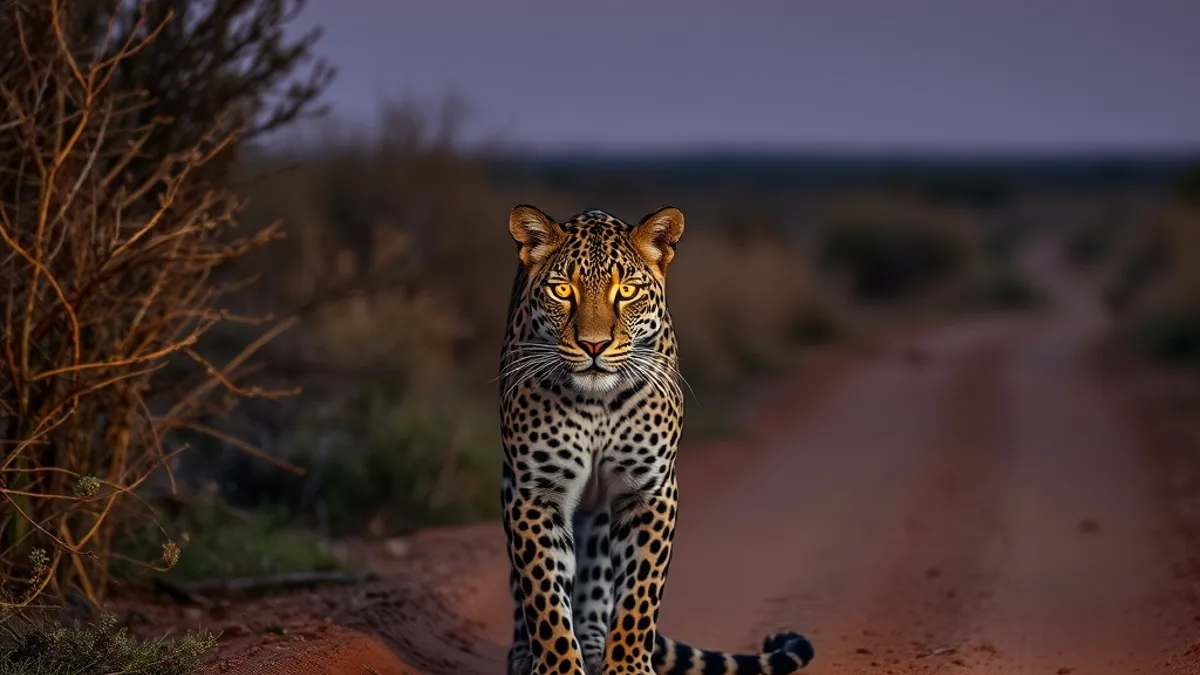
The animal most guests hope for on a night drive is the leopard. These cats are largely nocturnal, so after dark they are far more likely to be up and moving than they were during your afternoon game drive. A guide’s red-filtered spotlight sweeping across a tree line, catching that unmistakable rosette pattern, is the moment most people remember from the whole safari.
Leopards aside, a reliable cast of nocturnal regulars keeps every drive interesting. Spotted hyenas patrol the roads, civets and genets slink through the grass, and porcupines shuffle across the tracks in family groups. Bushbabies are a favorite with kids: their huge eyes flash in the light as they leap between branches. None of these animals are easy to see during the day, which is exactly why night drives feel so different from a standard game drive.
The rare rewards
Some drives get genuinely lucky. Aardvarks, pangolins and servals are all possibilities on the right night, and owls hunting over open grass can be a highlight for birders. These sightings are never guaranteed, but they happen often enough that guides talk about them with real excitement.
The red-filtered spotlights make all of this watchable. Red light preserves the animals’ night vision and disturbs them far less than white light, so you can observe eyeshine and natural behavior without sending every creature running for cover. Trust your guide’s judgment on when to switch the light off entirely.
Timing Your Stay for the Best Night Sightings
Timing matters more for night drives than most travelers realize. The dry months from June to October concentrate animals around remaining waterholes, which means more nocturnal traffic near the roads and tracks your vehicle can use. When water is scarce, predators and prey alike move along predictable routes after sunset, and your chances of a good sighting rise accordingly.
The first hour after sunset is usually the most productive. Nocturnal animals are cold-blooded opportunists in a sense: after a hot day, the cooler evening air gets them moving, hunting and calling. This is why drives typically depart 45-90 minutes after sunset, timed to catch that early surge of activity rather than the quieter hours later on.
Moon phases and seasons
Full-moon nights are a trade-off. Bright moonlight washes out the spotlight, making eyeshine harder to pick up, but it can also make predators more active because they can hunt effectively under natural light. Ask your lodge about the moon phase when booking if sightings are your priority.
Green-season drives work differently. Animal density near roads drops because water is spread across the landscape, so expect fewer big sightings. In exchange, you often get dramatic storm-lit skies, newborn animals, and far fewer other vehicles competing for the same tracks. Photographers who love moody conditions often prefer this season.
Practical Tips for Your First Night Drive
Your first night drive will be far more enjoyable with a little preparation. The biggest surprise for most first-timers is the cold: an open vehicle moving at speed after sunset gets chilly fast, even in warm months when daytime temperatures were well over comfortable. Dress in warm layers you can add or remove as the drive progresses, and bring a windproof outer layer.
Etiquette matters as much as clothing. Guides enforce strict silence near predators, because noise changes animal behavior and can end a sighting for everyone. Stay seated at all times, keep your hands inside the vehicle, and let your guide manage the light and the positioning. A little patience and quiet usually gets rewarded.
A few specific items and habits make the difference:
- Binoculars: much of what you spot after dark is distant eyeshine first; binoculars let you confirm whether it is a genet or a leopard before the vehicle moves closer.
- A personal red-light torch: useful for finding gear in the vehicle without ruining your own night vision or disturbing wildlife.
- No flash photography: a flash startles animals and can end a sighting instantly; rely on your guide’s spotlight and accept that night shots will be atmospheric rather than sharp.
- Closed shoes and long trousers: insects are more active after dark, and the ground around the vehicle is not somewhere you want bare ankles.
Finally, choose your lodge with care. Operators with experienced night-drive guides and low vehicle density in their area give you a calmer, higher-quality experience than crowded circuits where several vehicles converge on the same sighting.
Wrapping Up Your Night Drive Planning
If you take away one thing, let it be this: a night drive depends first on where your lodge sits. Private concessions and reserves generally offer them, while most national parks do not, so the promise of wildlife after dark is never automatic. Permits are handled by the lodge or operator, and booking 2-4 weeks ahead secures high-season spots at roughly $40-$120 per person.
Timing matters too. The dry months of June through October bring the strongest nocturnal sightings, from leopards and hyenas to bushbabies and the occasional aardvark. Once you are on the vehicle, warm layers, red-filtered lights and a lodge with low vehicle density make the difference between a good and a great drive. If this helped you plan your safari, leave a comment or share the article with a fellow traveler.